4 Sep 2026
SOURCE: CPF Board

Retirement planning might sound intimidating, especially when you’re not sure where to start. In essence, it’s a series of practical decisions you make today that can do the heavy lifting for you in the years ahead.
Reaching age 55 is an important retirement milestone for many Singaporeans. This is also when your CPF savings begin to play a more direct role in your retirement planning. Around this age, you may become more mindful of rising health insurance premiums.
Whether you’re weighing your next steps or planning for rising costs, this easy-to-reference guide walks you through the key aspects of retirement planning.
At age 55, your Special Account (SA) will be closed. Savings from your SA will first be transferred to your newly opened Retirement Account (RA), followed by savings from your Ordinary Account (OA).
The amount to be transferred is capped at the Full Retirement Sum (FRS), with the excess remaining in your OA for withdrawal or transfer to your RA for higher monthly retirement payouts.
The CPF retirement sums
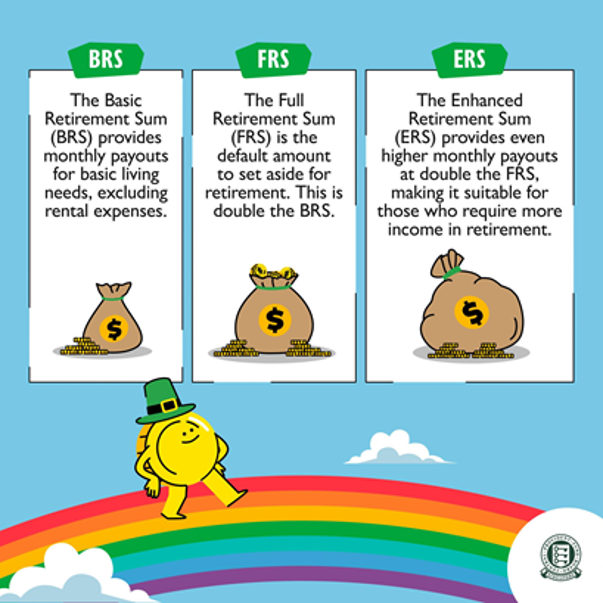
It’s worth learning about the retirement sums that apply to you as they form an important part of retirement planning with CPF. The three tiers correspond to different levels of monthly payouts in retirement. They are not mandatory targets, but useful reference points for setting your savings goal.
- Basic Retirement Sum (BRS): $110,200 in 2026. Provides an estimated $950* a month from age 65. Covers basic living needs, excluding rent.
- Full Retirement Sum (FRS): $220,400 in 2026. Provides an estimated $1,780* a month. A useful point of reference for how much you may need in retirement.
- Enhanced Retirement Sum (ERS): $440,800 in 2026. Provides an estimated $3,440* a month. Suitable for those who want a higher monthly income.
*Payout figures are based on a male member on the CPF LIFE Standard Plan and may also be adjusted to account for long-term changes in interest rates or life expectancy.
Withdrawing your CPF savings at age 55
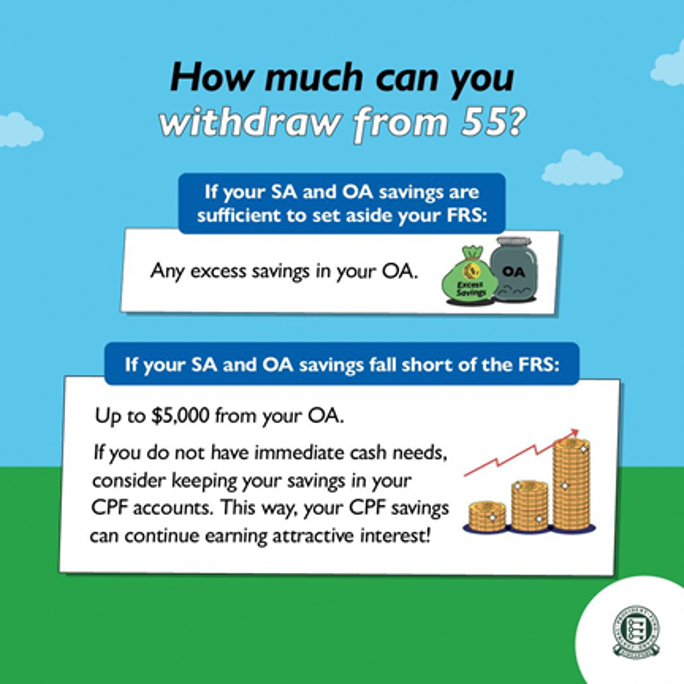
As your CPF savings are meant to fund your retirement, you can withdraw any excess savings in your OA after setting aside your FRS.
If you own a property in Singapore with a lease lasting until at least age 95, you also have the flexibility to set aside your FRS with a mixture of property and cash. This means that the CPF savings you have used for your property can count towards up to half of your FRS.
If you do not set aside the FRS, you can still withdraw up to $5,000 from your SA and OA savings unconditionally.

CPF LIFE is a national insurance scheme that forms the backbone of your retirement and provides lifelong monthly payouts based on the savings in your RA.
How CPF LIFE works
One of the biggest challenges in retirement is ensuring that your savings last for as long as you do.
A reliable stream of lifelong income can provide greater peace of mind and financial security throughout your retirement years. This is where CPF LIFE comes in.
When you reach your payout eligibility age (age 65 if you were born in 1954 or later) and choose to start your payouts, the savings in your RA are used to pay your CPF LIFE premium. This gives you a lifelong monthly income in retirement.
Similar to an insurance premium, your CPF LIFE premium is the amount you pay for the CPF LIFE policy in exchange for regular monthly payouts for as long as you live. The amount of CPF LIFE premium varies depending on the CPF LIFE plan you choose.
Your monthly payouts are first paid from your CPF LIFE premiums, and once depleted, you continue receiving payouts from pooled interest that has accumulated.
If you pass away, any remaining CPF LIFE premium and other CPF account balances will be paid to your beneficiaries in cash.
Choosing a CPF LIFE plan
There are three CPF LIFE plans to choose from, and the one that suits you best depends on how willing you are to adjust your retirement lifestyle to account for inflation.
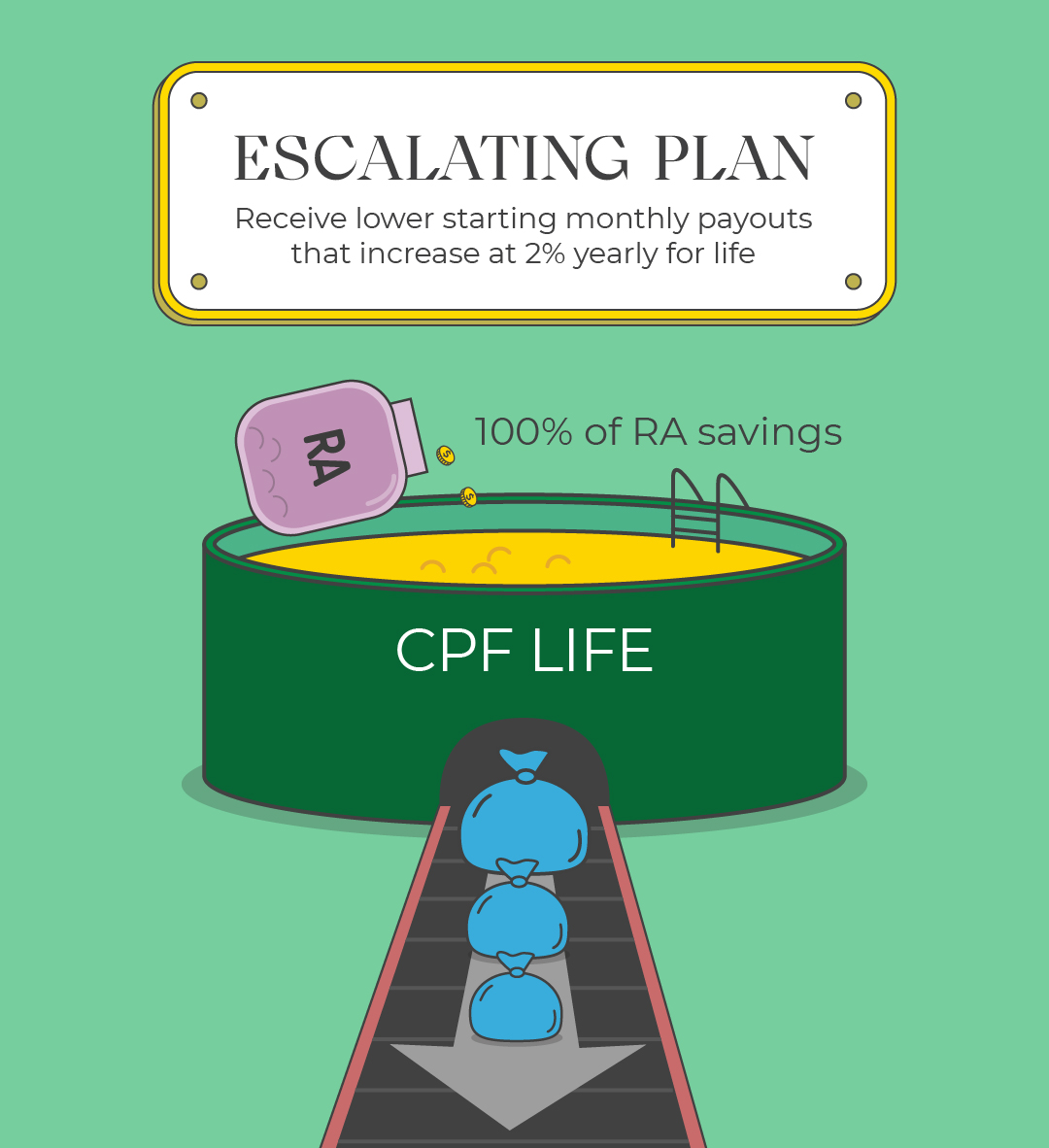
Escalating Plan
Monthly payouts start lower but increase by 2% each year for life. This can help you manage inflation without having to make significant adjustments to your spending habits.
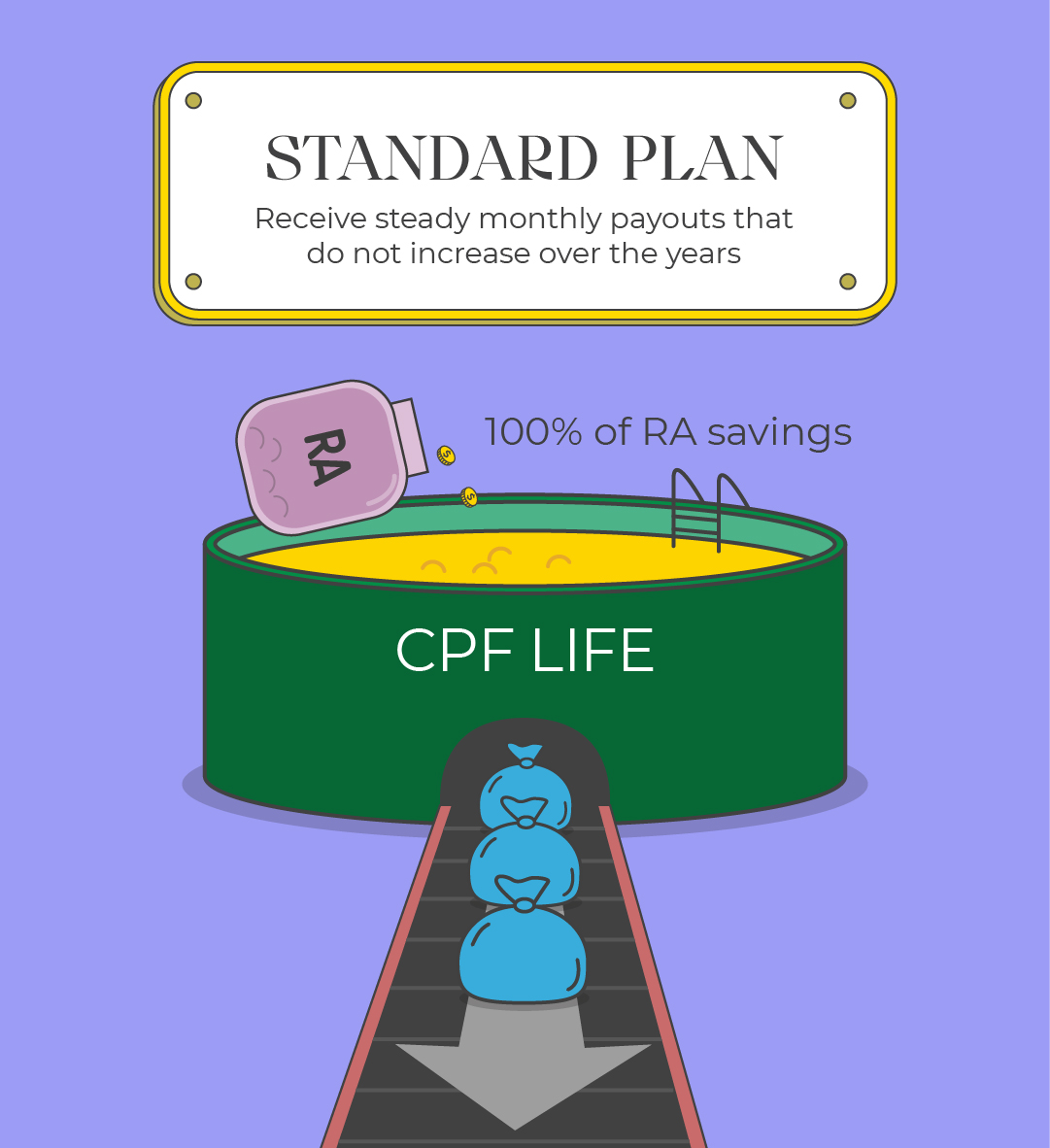
Standard Plan
Steady monthly payouts that do not increase over time. This does not protect you from inflation, which means you should be prepared to adjust your spending over time.
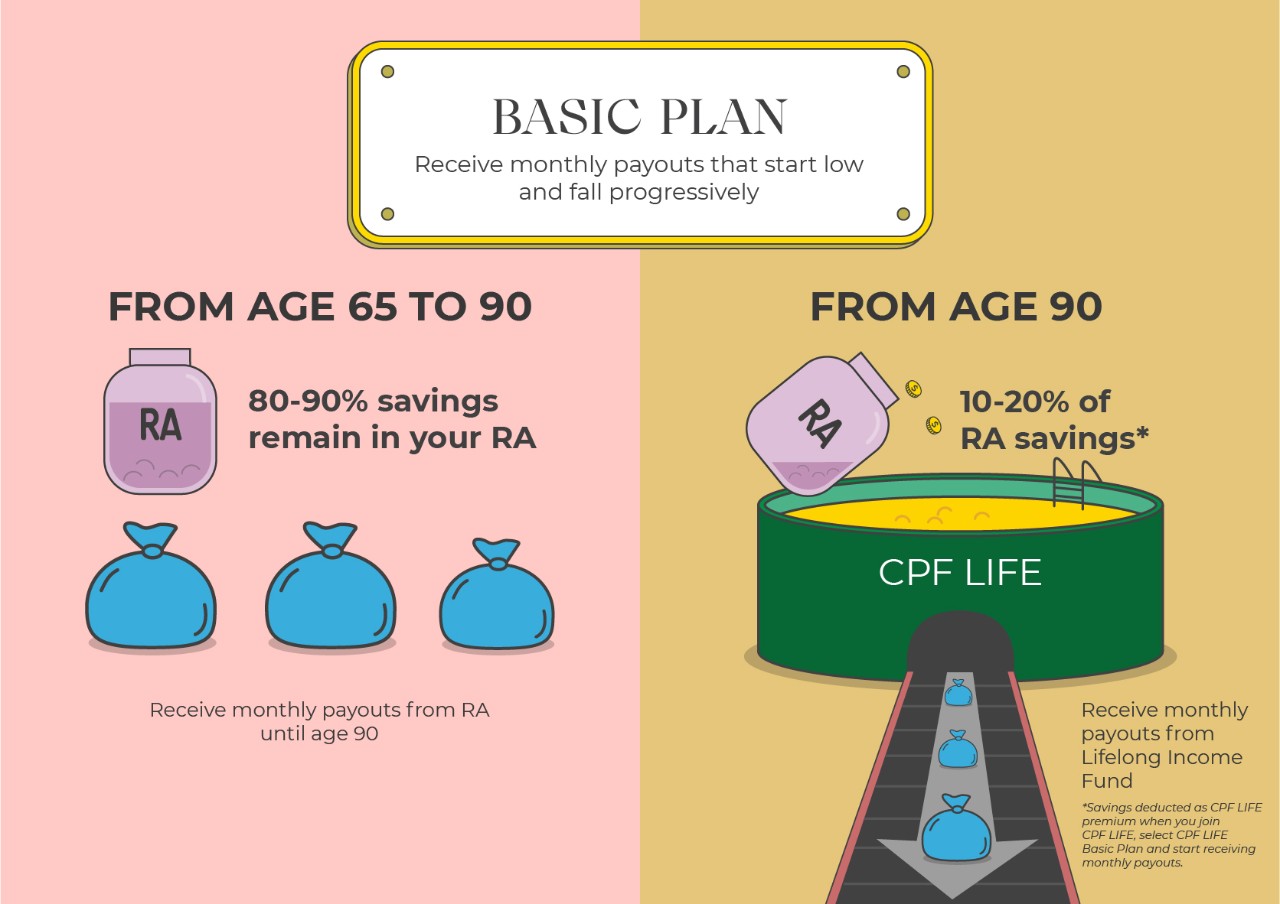
Basic Plan
Most of your RA savings remain in your RA and are paid out to you first. Only about 10% to 20% of your RA savings goes towards the CPF LIFE premium. As a result, your payouts will decrease when your RA savings are largely depleted and fall below $60,000. This plan may suit you if you can lower your spending over time.
Deciding when to start your CPF LIFE payouts
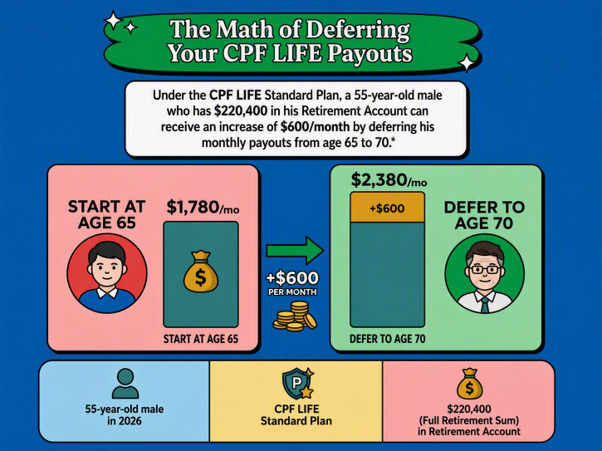
Image created with AI assistance
You can start receiving your lifelong monthly payouts at age 65. But you also have the option to defer them up to age 70. Every year of deferment increases your payout by up to 7%.
For example, a 55-year-old man in 2026 with $220,400 in his Retirement Account on the Standard Plan would get $2,380 a month from age 70 as compared to $1,780 from age 65.
Deferring may make sense if you have other income streams or prefer higher monthly payouts later in retirement. Starting earlier may make more sense if you need or prefer to receive the money sooner.
If you are turning 55 soon, you can run your own numbers using the monthly payout estimator to determine which payout start age works best for you.
You can also use the Retirement Payout Planner to set a retirement payout goal based on your desired lifestyle and assess whether your current income can help you reach it.
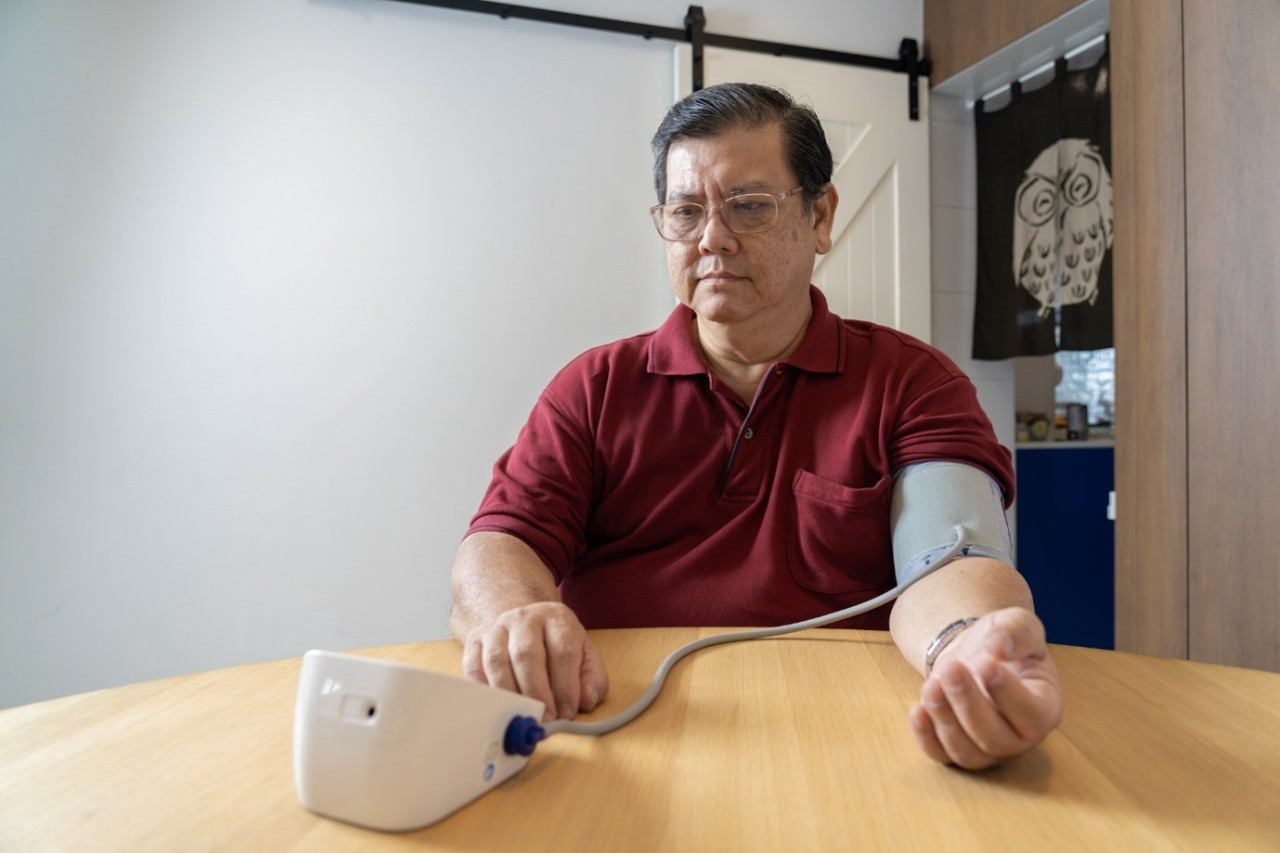
Healthcare needs and health insurance premiums increase with age. Reviewing your coverage while you’re still in good health can give you greater peace of mind in retirement.
Healthcare coverage and rising insurance premiums
All Singaporeans are covered by MediShield Life, which is designed to cover large bills in Class C/B2 wards in public hospitals. MediShield Life premiums can be paid in full using MediSave, whether from your own account or a family member’s.
An Integrated Shield Plan (IP) can be used to supplement your healthcare needs, giving coverage to private hospitals and Class A and B1 wards.
The catch is that insurance premiums are tied to your age, and they rise faster than most people expect. Rider premiums, the add-ons that cover things like higher payouts or private hospital stays, must be paid in cash and can triple between ages 50 and 70, from around $3,000 to $9,000 a year for private hospital riders.
Approaching age 55 is a good time to review your coverage and assess whether the premiums are sustainable based on your projected retirement income.
Should you keep your Integrated Shield Plan?
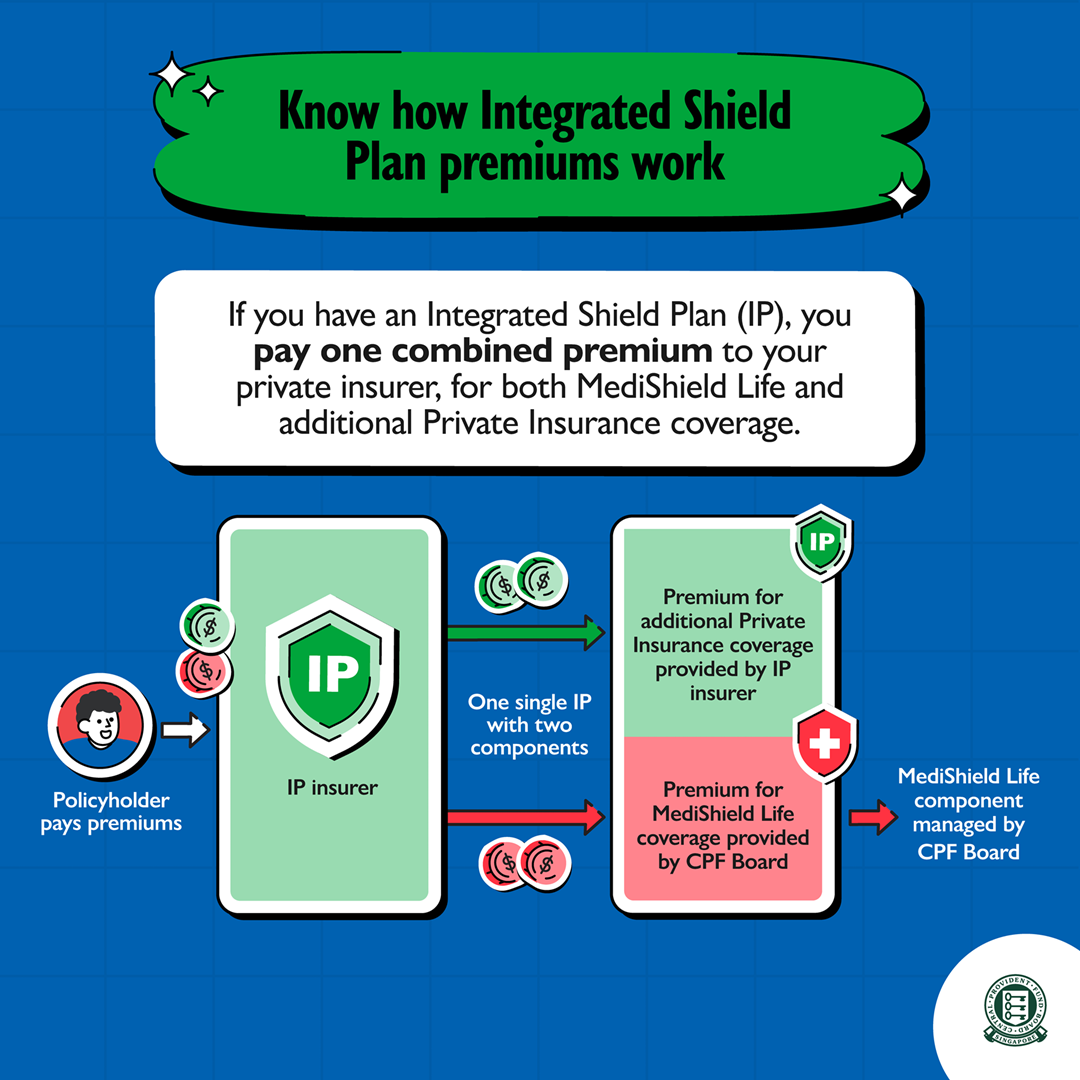
Before you renew your IP, ask yourself what you're actually paying for. About half of patients with IPs still end up using subsidised public healthcare when hospitalised, effectively paying for private coverage they don't use.
It's worth reviewing your choice of plan by asking yourself:
- Does my coverage match how I want to be treated if hospitalised (public or private hospital)?
- Can I sustain the premiums on a retirement income over the next 20 to 30 years?
- Would downgrading my ward class, or dropping the rider but keeping the IP, give me a more affordable balance?
Protect yourself against the costs of long-term care with CareShield Life
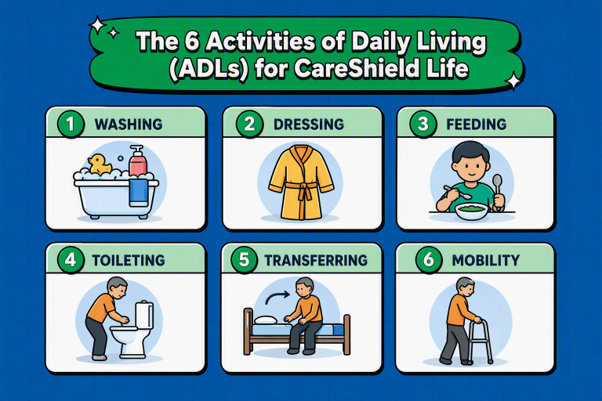
Image created with AI assistance
Healthcare planning in retirement goes beyond hospitalisation and medical bills. It is also important to consider how you will cope financially if you need long-term care due to severe disability.
As one ages, the risk of severe disability and the need for long-term care increases.
That’s when CareShield Life, Singapore's national long-term care insurance, comes into play.
Premiums are fully payable by MediSave, and the scheme pays a monthly cash payout for life if you're unable to perform at least three out of six daily activities independently, such as feeding, dressing, or moving around.
If you’re born in 1979 or earlier, your participation in CareShield Life is optional. Check your CareShield Life coverage by logging in through the Healthcare dashboard. You may also choose to apply for CareShield Life online.
Review your healthcare coverage with the Health Insurance Planner
The Health Insurance Planner is a personalised tool that helps determine if your insurance coverage is optimal for you by helping to compare IP options and estimate your future MediSave balance.
You can also use this handy tool to project how your insurance premiums change over time.
For many Singaporeans, a home is both a place to live and one of their largest assets.
As you approach retirement, it is worth reviewing whether your current housing arrangements continue to meet your lifestyle, caregiving and financial needs.
Your children may be moving out, the rooms may feel emptier, and you might realise that your current home may no longer serve you best in retirement.
Refunding your CPF savings when you sell a property at age 55
When selling your flat at or after age 55, you will need to refund the principal you withdrew for the property, plus the accrued interest you would have earned had that money stayed in your OA.
If your CPF savings used for your property had been counted towards meeting your FRS, this amount will be refunded too.
The refund is used to top up your RA to your FRS. Any balance remains in your OA, where you can leave it to earn risk-free interest, use it towards your next home, or withdraw it in cash.
Rightsizing your home
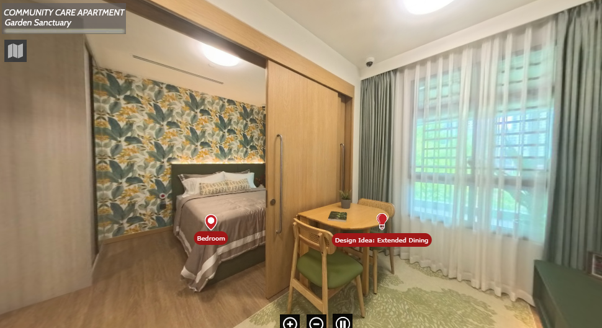
Showroom of a Community Care Apartment
Source: MyNiceHome Gallery
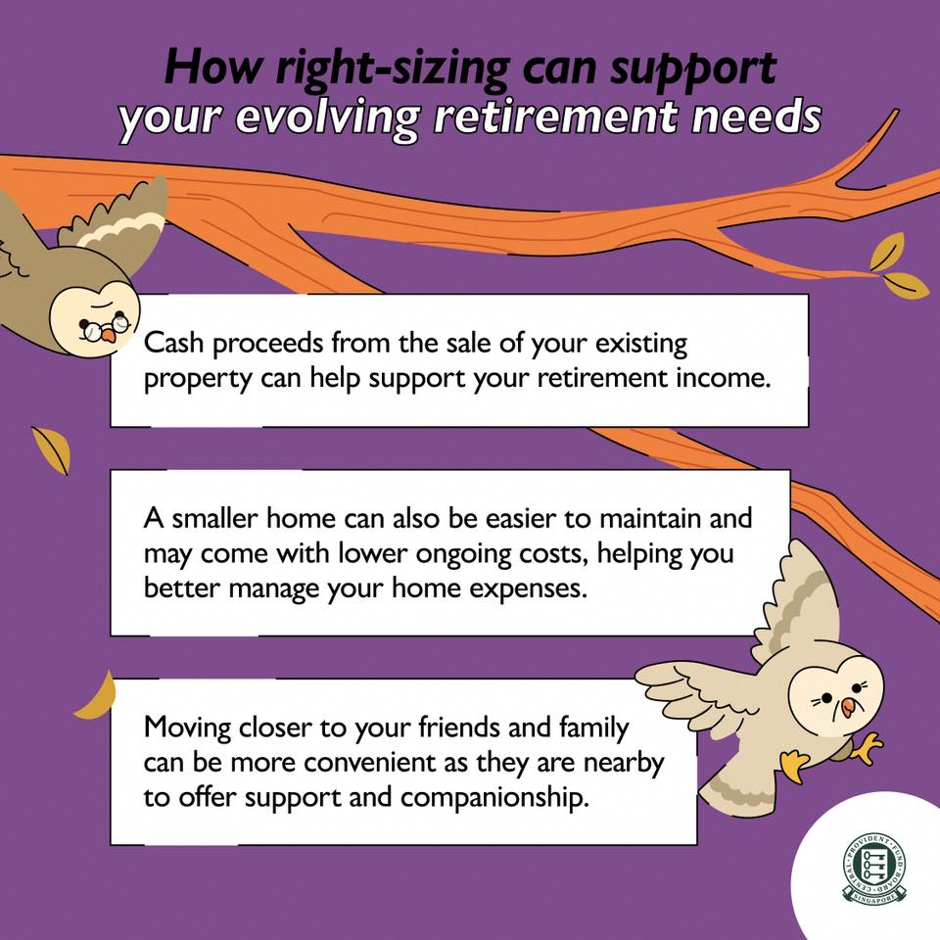
A common misconception is that rightsizing means downgrading. In reality, moving to a smaller, cosier home can lower your utility and maintenance costs, helping to keep your monthly expenses manageable. It also gives you a fresh opportunity to design a space tailored to your needs as you age.
Two housing options are worth keeping in mind if you're aged 55 and above:
- Short-lease 2-room Flexi Flat: available to those aged 55 and above, with a flexible lease of 15 to 45 years. These are typically less expensive than standard flats.
- Community Care Apartment (CCA): available from age 55, these come with senior-friendly features, along with a basic care package covering 24-hour emergency monitoring, health checks, and an on-site community manager.
If you move to an eligible flat, the Silver Housing Bonus can provide a cash bonus of up to $40,000, on top of what you free up from the sale itself.
Use the Home Purchase Planner for your next property purchase
If you're purchasing another property, the Home Purchase Planner takes into account your current financial and housing situation, housing grants, and desired financing option to offer a personalised home purchase budget.
You can also use it to simulate how reducing your CPF usage for monthly instalments could increase your retirement payouts.

Even as retirement draws closer, there is still time to make your CPF savings work harder for you. A few well-taken steps now can help boost your retirement income.
CPF contribution rates as a senior worker
Your CPF contribution rates change as you age, so it is useful to know what to expect.
Lower rates mean that less is contributed to your CPF accounts each month, slowing the growth of your retirement savings.
The current rates for 2026 and the revised rates taking effect from 1 January 2027 are:
Top up your own savings and those of your loved ones with cash
If you are age 55 and above, you can boost your own RA savings up to the current ERS, through the Retirement Sum Topping-Up Scheme (RSTU).
The top-ups earn up to 6% p.a. in your RA, and cash top-ups attract tax relief of up to $8,000 for yourself and another $8,000 for your loved ones each calendar year if they are made up to the FRS. Terms and conditions apply.
Do note that cash top-ups are irreversible, so make sure you have enough liquid savings for your daily expenses before topping up.
Matching grants with the Matched Retirement Saving Scheme (MRSS) and Matched MediSave Scheme (MMSS)
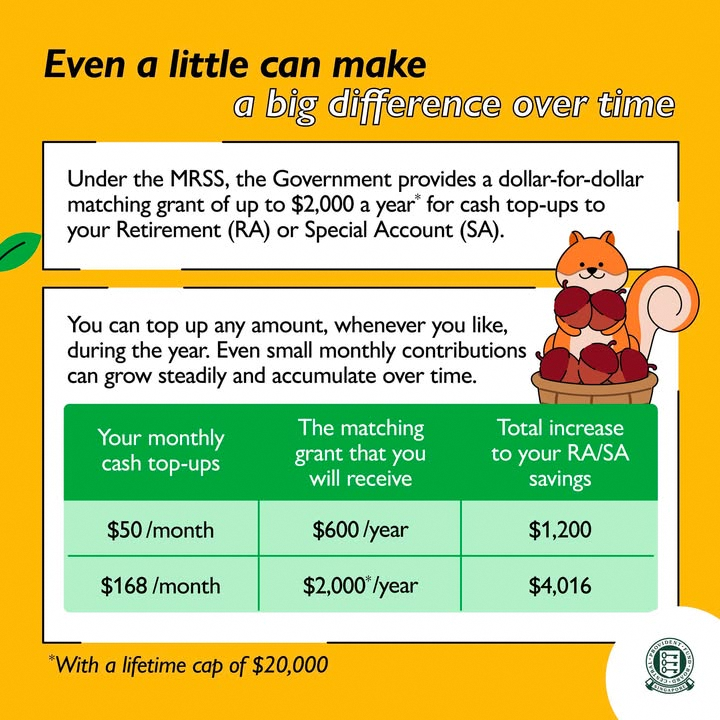
The MRSS and MMSS offer matching grants on cash top-ups to the RA and MA of eligible CPF members, capped at $2,000 and $1,000 a year respectively. This means that the Government will match your top-ups dollar for dollar, up to the applicable grant caps.
By topping up $2,000 a year from age 55 to 65, you can grow your RA by $48,000 through the matching grant and compounding interest alone. This adds approximately $260 more a month in lifelong monthly payouts from CPF LIFE.

An often-overlooked aspect of retirement planning is knowing what happens to your savings when you pass away. Settling this now can save your loved ones from added stress and confusion upon your passing.
A CPF nomination lets you specify who receives your CPF savings when you pass away. This allows your nominees to receive them quickly without going through the Public Trustee's Office. Without one, your savings are distributed under intestacy laws which might not account for your unique family circumstances.
A nomination may be easy to set and forget, but life can change quickly. This makes it important to review yours annually.
Retirement planning made easy with CPF
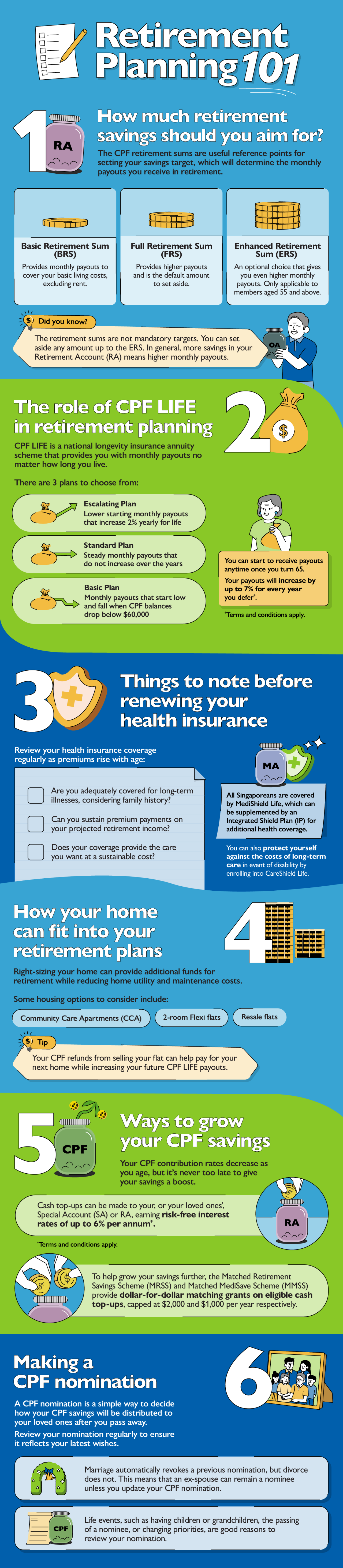
As with everything in life, your plans can change over time. It is worth reviewing your retirement plan every now and then to make sure it still feels right for you.
The decisions in this guide, from meeting your retirement sum to making your CPF nomination, can each be tackled in their own time. What matters is taking the first step.
If you enjoyed reading this article, don’t forget to bookmark it or save the image above for easy reference!
Information in this article is accurate as at the date of publication.