13 Jul 2026
SOURCE: CPF Board

Do you know how much your health insurance costs now? And more importantly, what it will cost in the future?
Healthcare is often overlooked in financial planning, with many taking a reactive, rather than proactive, approach. But caring for yourself and even your loved ones require planning ahead. While savings help with unexpected costs, major expenses like hospitalisation need extra support.
The right health insurance provides this protection, making it essential to choose a plan that fits your needs.
All Singapore Citizens and Permanent Residents are covered under MediShield Life, a national health insurance scheme that provides universal lifelong protection against large healthcare bills.
But if you prefer supplementary coverage – for example Class A and B1 wards in public hospitals or your choice of doctor, you can consider an Integrated Shield Plan (IP). IPs are provided by private insurers offering additional medical insurance coverage on top of what MediShield Life offers. Before getting an IP, you will need to evaluate factors such as long-term cost and affordability, and your preferred level of care.
Once you’ve figured out your care preference, your next step is to consider what option best meets your healthcare needs and financial situation.
It’s vital that you know exactly what the coverage and benefits in the health insurance plan are, especially as a first-time buyer. A plan with higher premiums or higher claim limits may not offer the most cost-effective solution for your situation. For example, if the coverage exceeds your actual healthcare needs, you might be paying higher premiums for benefits you may never use. Some plans with higher claim limits might still have significant deductibles, co-payments, or exclusions that could result in higher out-of-pocket expenses.
Personal factors to consider are your family medical history, lifestyle and occupation risks, as well as your financial situation when choosing a plan.
Consider how your insurance plan fits into your retirement plan. While you may be able to afford private insurance comfortably during your working years, do take into account your ability to continue paying the insurance premiums and out-of-pocket expenses which will increase with age. It’s essential to plan how you’ll finance your healthcare insurance over the long-term without compromising your desired retirement lifestyle.
Life circumstances can change, and the coverage you require a few years down the road may differ from what you first purchased. Reviewing your coverage regularly to make sure your protection remains adequate. A good example of why you should review it now is due to the new IP rider requirements that MOH introduced in April 2026.
Comparing IPs and riders, weighing your options, and keeping up with changes all take time and effort, so what’s the best way to navigate your health insurance coverage? That's where the CPF Health Insurance Planner (HIP) comes in.

The key features of the HIP allow you to:
- Make long-term, personalised projections of your MediSave savings and health insurance premiums
- Compare key benefits, features and premiums across IPs for your preferred ward type
- Project long-term premiums for your selected IP and rider (including the new IP riders) so you can see how different options affect your premiums and out-of-pocket costs.
Here’s how you can complete the HIP in just four simple steps:
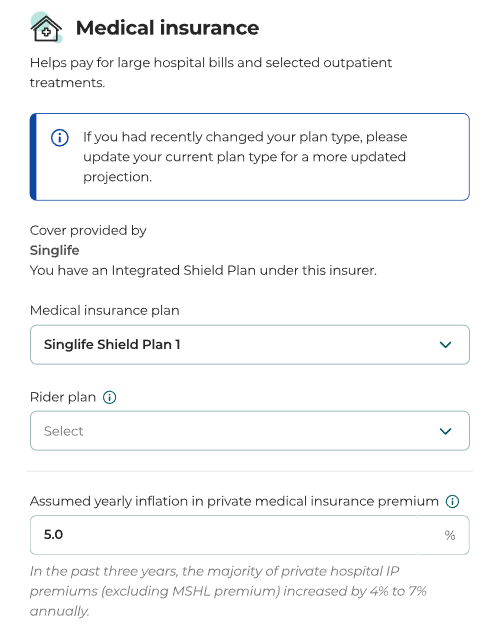
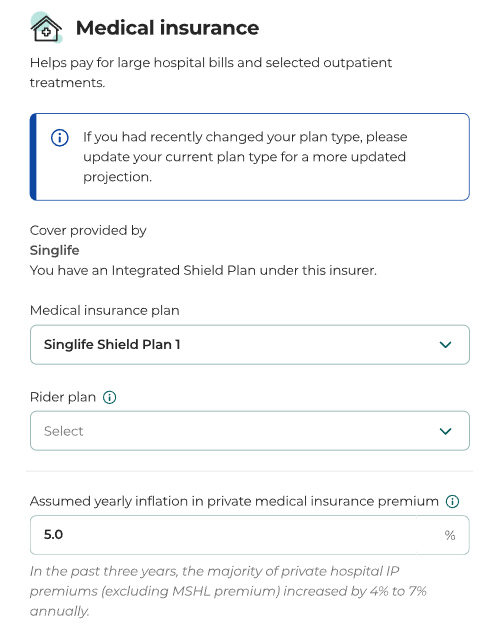
Once you log in with your Singpass, the HIP will then auto-populate your details, so you don’t have to fill everything in from scratch. This includes:
- The name of your IP and rider(s), if any
- The number of years left to pay for your CareShield Life and ElderShield Supplements
- The number of years you intend to pay for your dependant's health insurance premium
- Your monthly and additional income (such as bonuses) before CPF deduction
You can update any of these details manually if anything has changed.
Projection 1: With MediShield Life only

You’ll be able to project ahead to see what your savings and expenses will be like in the future. The planner is able to project up to 3 decades ahead from your current age, capped at age 90, whichever is earlier. As shown above, the green bar depicts your projected cumulative MediSave savings, whereas the orange bar projects your cumulative MediSave expenses*. It lets you see what your future expenses and savings are with your current plan.
*Includes the following:
- Medical expenses, such as average hospital bills and treatment costs incurred at every age
- MediShield Life premiums paid using MediSave
- IP premiums capped at MediSave Additional Withdrawal Limits (AWLs)
- CareShield Life/ElderShield premiums and supplements capped at AWL
- Dependants’ health insurance premiums, if any
Projection 2: With IP only
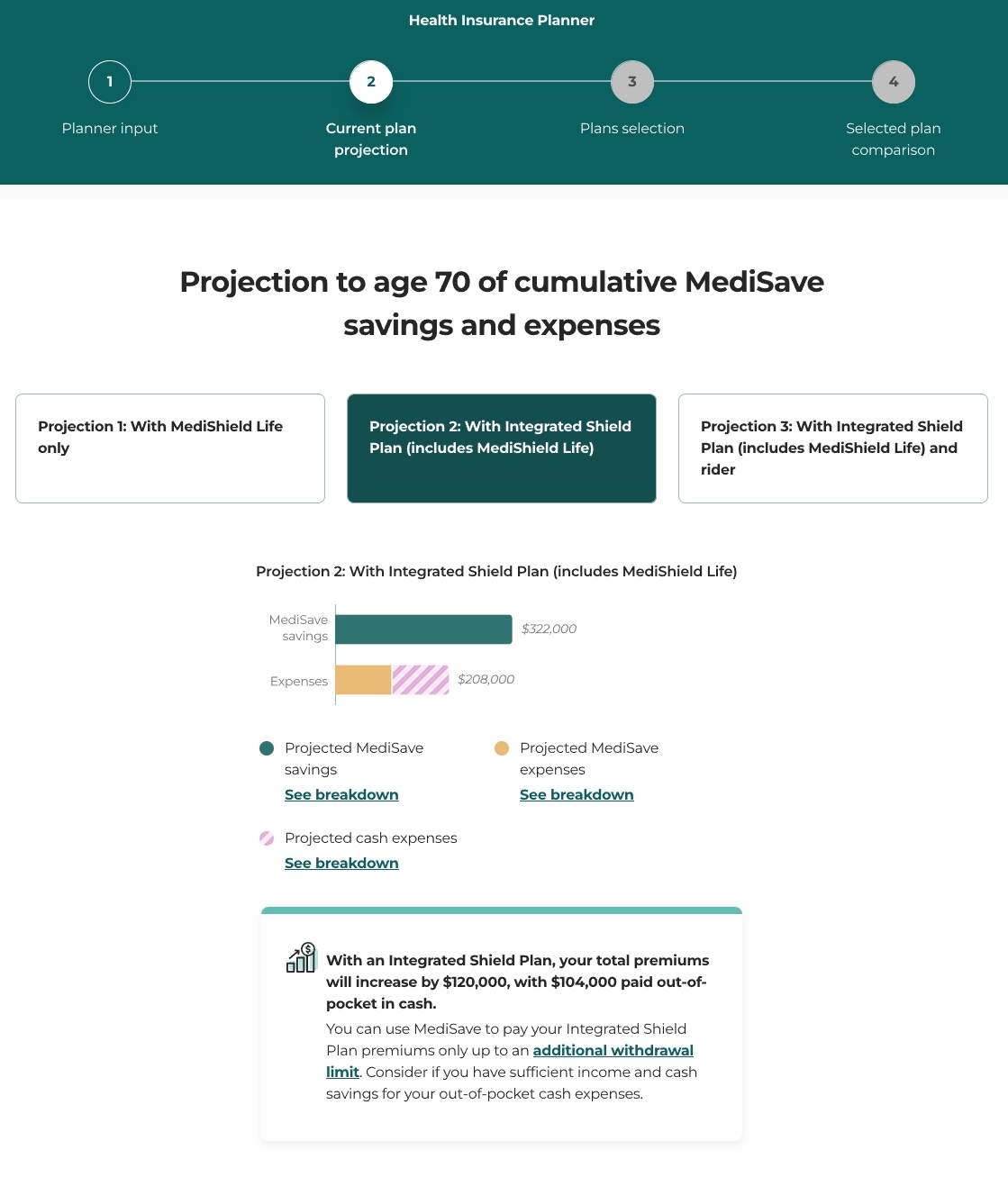
The next projection is with the IP, including MediShield Life.
The pink bar represents projected cash expenses, giving you a clear idea of where your savings and expenses are at.
Projection 3: With IP and rider
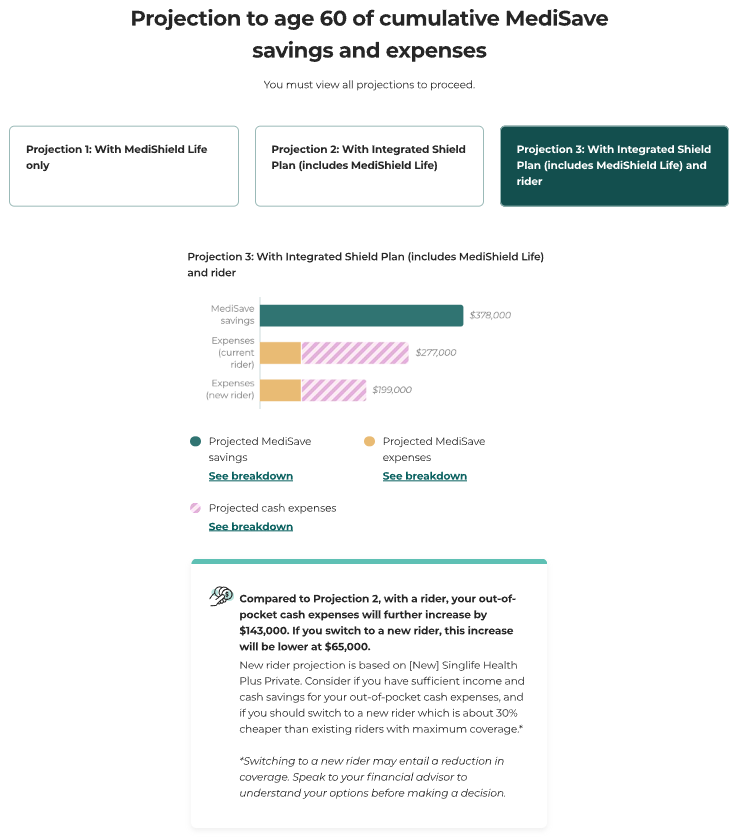
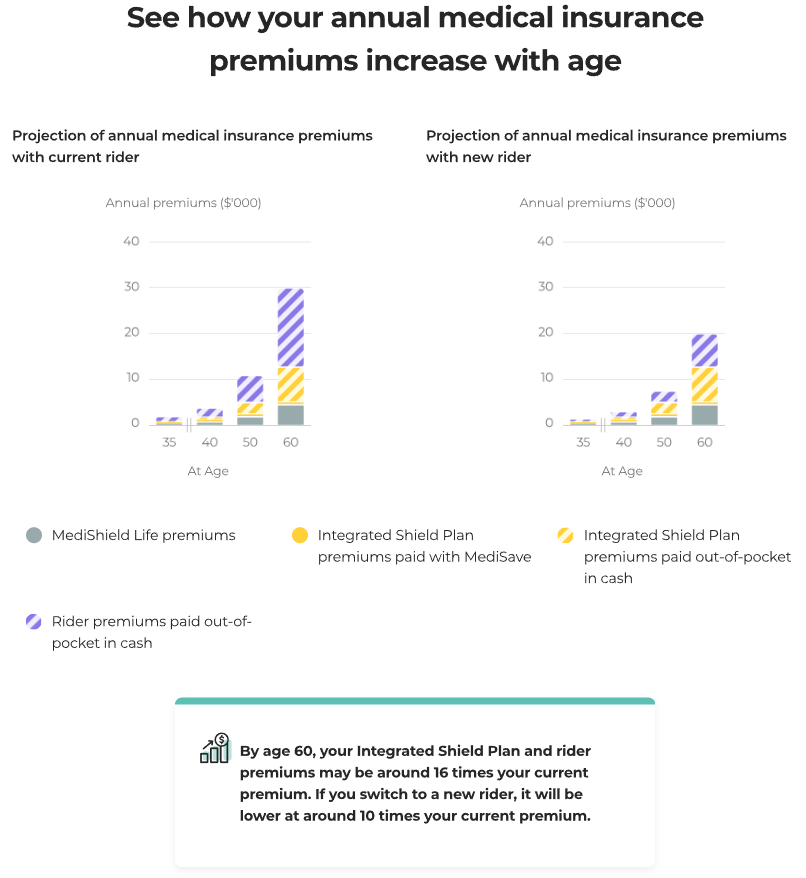
For the third projection, the pink bar now shows projected cash expenses, including IP and rider premiums. If your legacy rider premiums exceed those of a comparable new rider, the planner will highlight this for you.

This helps you make a direct comparison between your current IP to other IPs in the market. You can use it to compare key features, premiums and out-of-pocket costs, and evaluate if your current plan best suits your healthcare needs. If you have not purchased an IP yet and wish to do so, you can also compare the different IPs before making your decision.
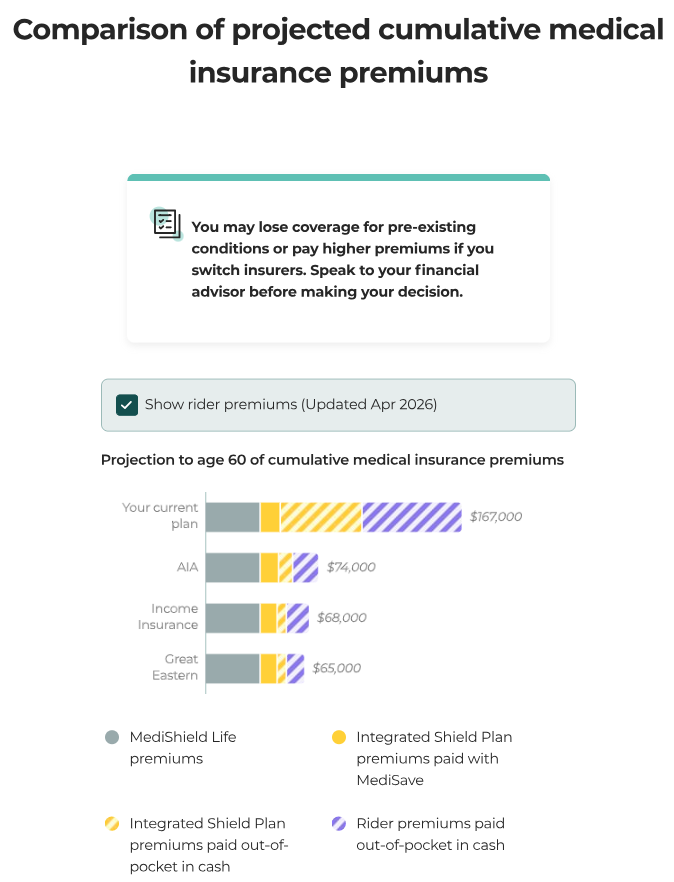
At this point, you can compare the projected cumulative premiums across your various options. The projections use the most expensive rider for the selected IP to take into account the costliest payments that can be incurred.

The projected annual premiums over the next three decades will also be shown. This helps you better visualise how much the premiums grow as you age, and decide if you are able to continue funding your current insurance plan, especially if you are near or during retirement.
You have the option of downloading your personalised report so that you can refer to it without filling in the form again.
It’s important to note that the HIP does not seek to make any decisions for you. Instead, this tool is there to help you make informed decisions, such as being able to better visualise your long-term MediSave savings, projecting future health insurance premiums, and comparing key benefits and features across IPs and riders. Combined with your health, lifestyle and financial situation, a quick check with the HIP is worthwhile, so that you can now pick a plan that best suits your personal needs and care preferences.
Information in this article is accurate as at the date of publication.

_600x400.webp/jcr:content/renditions/cq5dam.thumbnail.300.200.webp)
