16 Sep 2026
SOURCE: CPF Board

Stepping into the working world is a huge deal. You may be earning a salary now, but with it comes a bunch of new financial responsibilities and considerations.
Financial planning may seem daunting at first, but with the right preparations and knowledge, navigating this new and possibly intimidating chapter of your life can be made easier. Here’s a handy guide to help you tackle financial planning as you begin your first job.
You might have already learnt this well before you started working, like when you learned how to manage your pocket money. The same basic rules apply when you receive your salary - know what you’re saving for and set aside a portion of your salary to build those savings, while ensuring you have enough for your expenses.
A good rule-of-thumb to follow is the 50/30/20 rule, which splits your salary this way:
50%: for your needs, which are essential expenses you must spend on, such as housing, food and transportation.
30%: for your wants, which are non-essential expenses such as shopping, movies and so on.
20%: for your savings, which is what you put aside for future needs.
In this way, you will ideally put aside at least 20% of your monthly income towards your savings, so when you find yourself needing immediate access to cash, you’ll still be covered. You can also adjust the ratios to better suit your situation and preferences. For instance, if you’re looking to make a big purchase in the future, you might want to decrease the amount you spend on wants to increase how much you save every month.
Budgeting well is key to building your cash savings. When done consistently, it helps you be more intentional about your money, build good financial habits and make better-informed decisions for your future needs.
Your CPF savings form the foundation of your retirement and financial plans for the future. Here’s a quick overview of how your CPF accounts handle your dough:
Your CPF savings grow via compound interest, which means that any interest earned on your savings will also earn you additional interest. This allows your savings to grow more, the longer you leave them in your accounts.
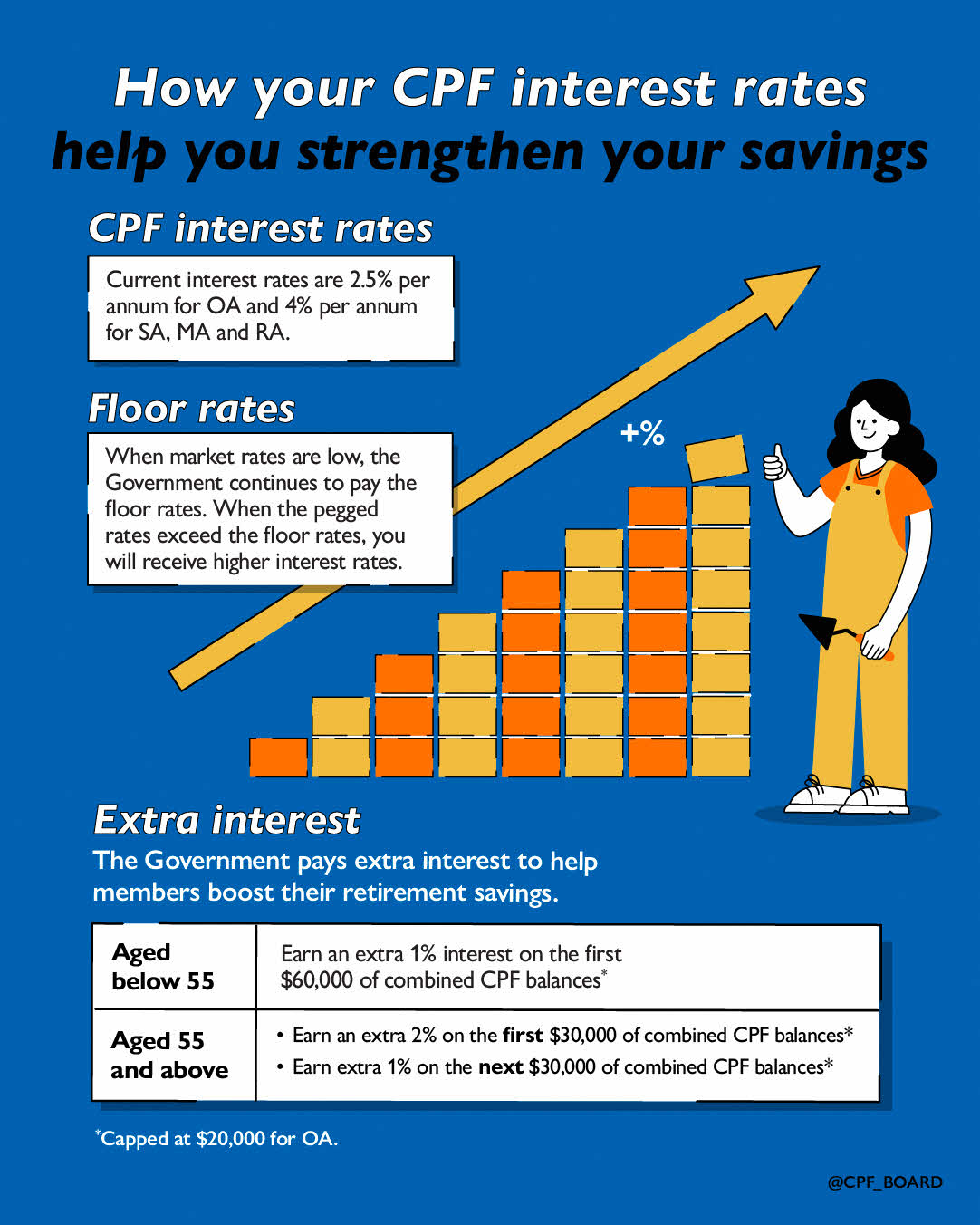
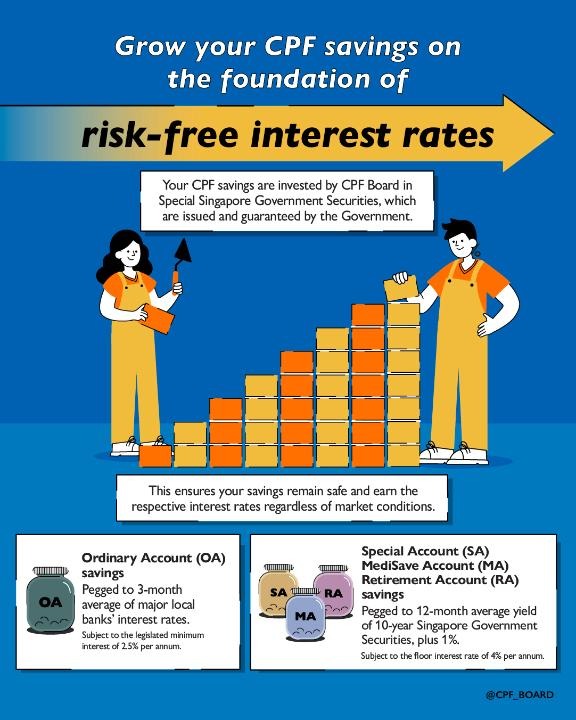
Why does this matter? It’s because CPF’s interest rates are generally risk-free:
Here’s a video summarising how your savings grow:
Having a guide for your retirement
It’s never too early to understand how CPF works, so that you know if you’re on the right track with growing your savings towards your retirement goals.
Over time, the savings in your Retirement Account (RA) will eventually form the basis for your monthly retirement payouts. A useful reference for how much you may need by then is the CPF Retirement Sum:
As your life goals may change over time and impact how much you aim to set aside as your Retirement Sum, it’s important to review your financial plans regularly. Nonetheless, the Retirement Sums can still help guide your financial and retirement planning decisions as you work and save.

A major purchase to plan for when you start work is your first home. As mentioned before, your Ordinary Account (OA) savings can help pay for your first home, but it’s still important to plan out how to best utilise it:
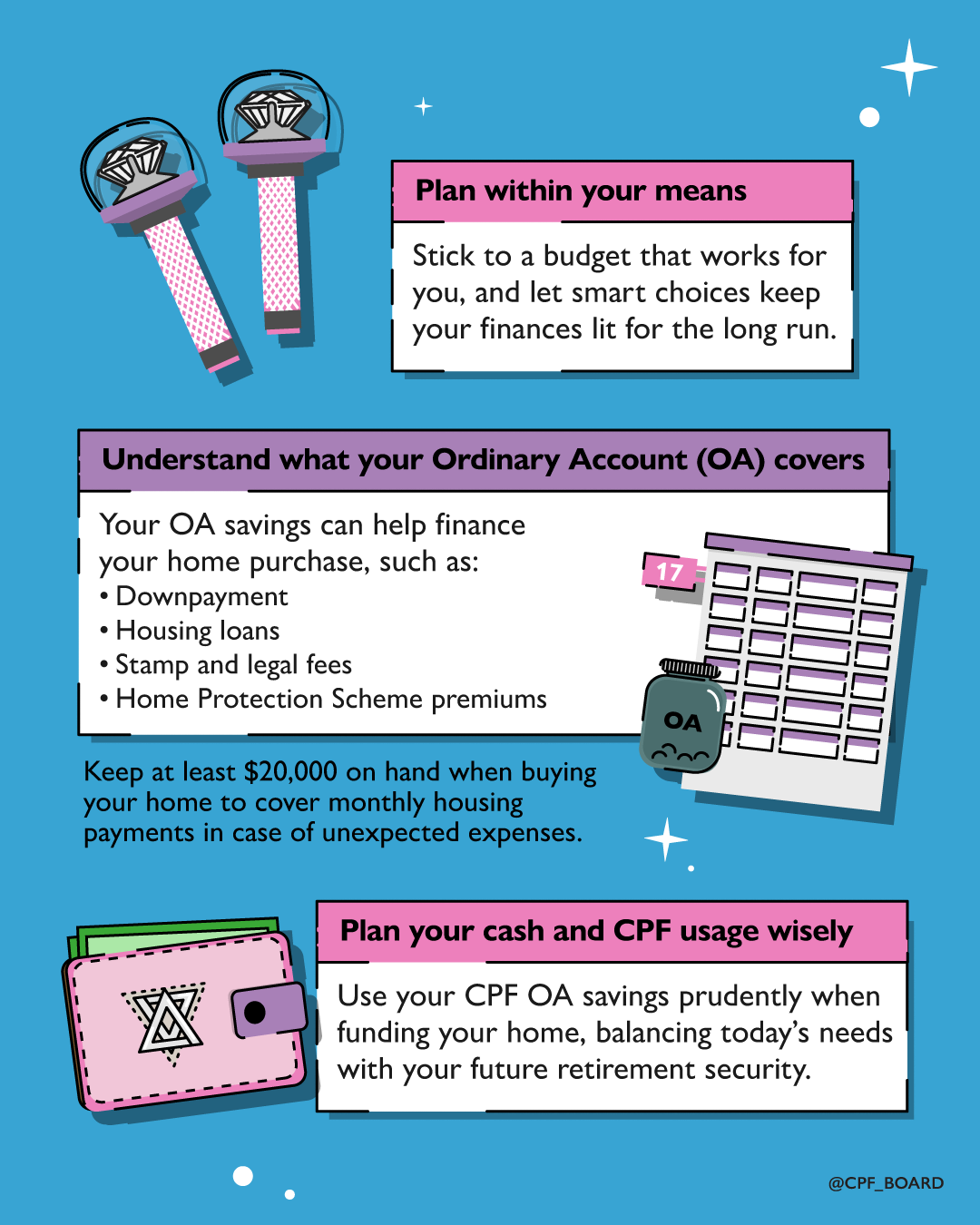
Your OA helps with buying your first home, but it’s also important not to clear out your entire OA just for this purpose. The risk-free interest rates offered by your OA play a big part in building up your savings for retirement. Using a mix of cash and CPF savings to pay for your first home purchase can help you better balance your housing and retirement needs too.
Additionally, other important things to consider include reviewing which loan type works best for you, and using the CPF Home Purchase Planner to help you plan out your housing budget:
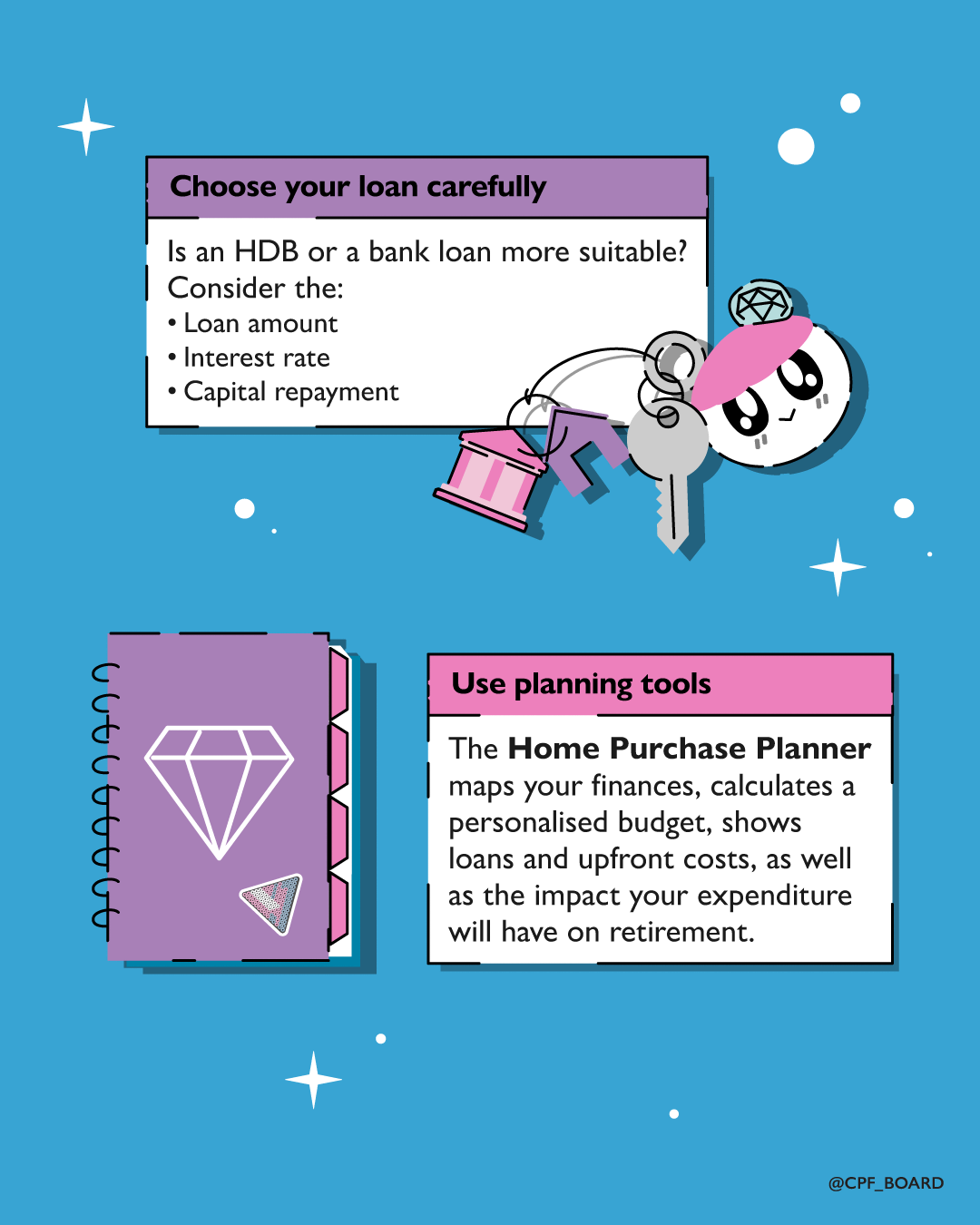
Besides using your CPF, it’s also important to know what housing grants you may qualify for, such as the Enhanced CPF Housing Grant and the Proximity Housing Grant. Understanding of your needs, housing budget, and available financial support can help you have a smoother start to your home buying journey.

As you enter the workforce, you might be inundated with requests to chat about insurance (that’s also part and parcel of being an adult!). Even if it feels early, part of planning for the future also means accounting for unexpected health issues such as accidents, or hospital stays. Just as your CPF helps you save for retirement, it can also help support your healthcare needs.
Your MediSave Account (MA) is one of the accounts that help you navigate financial planning, but how exactly does it work?
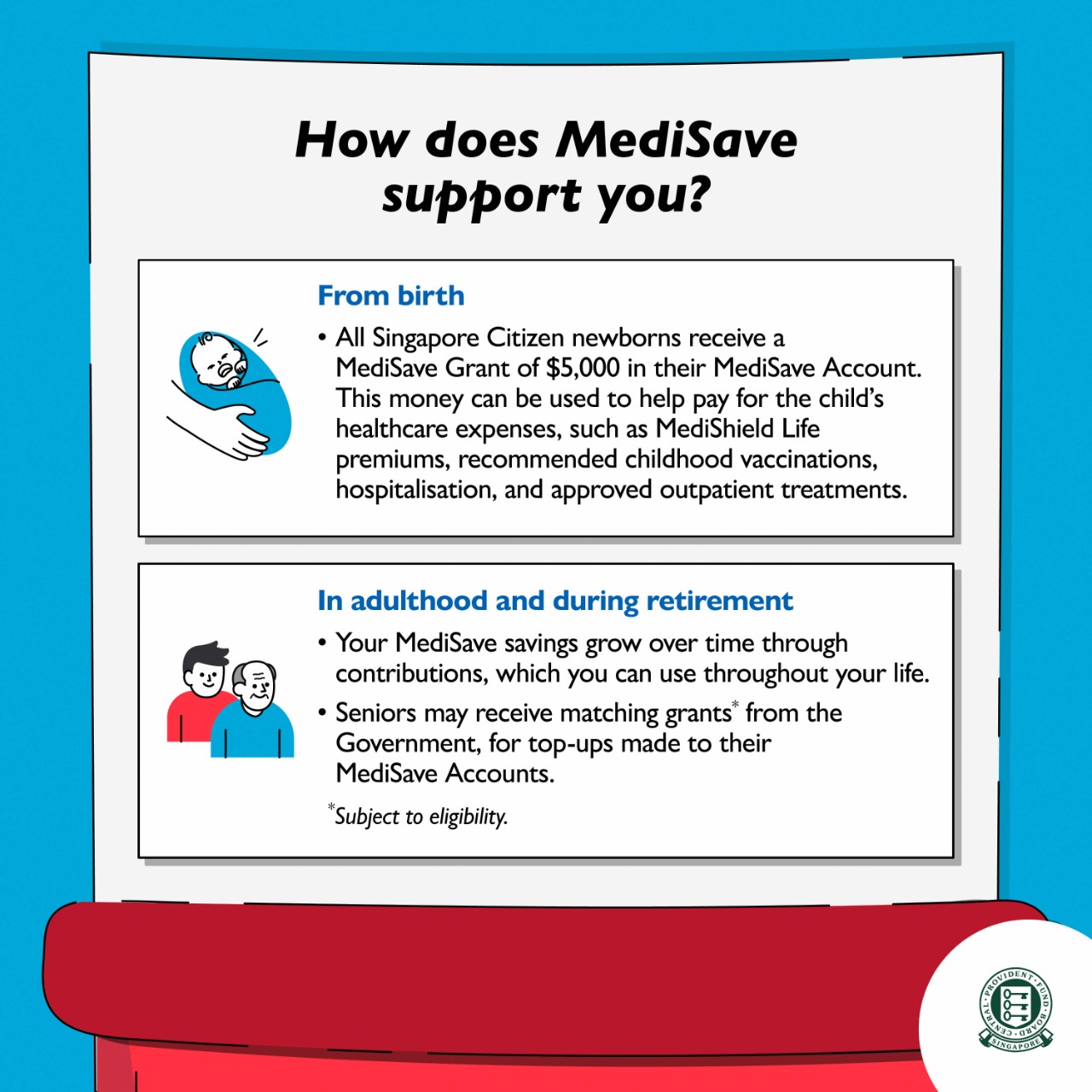
One thing to note: there is a limit to how much you can have in your MA. This cap is known as the Basic Healthcare Sum (BHS). The BHS is also adjusted annually to keep pace with rising healthcare consumption, to ensure it stays relevant for when you retire. Once you’re 65 years old, your BHS is fixed and will remain unchanged for the rest of your life.
When it comes to the benefits of MA, its usage extends to your loved ones as well as yourself:
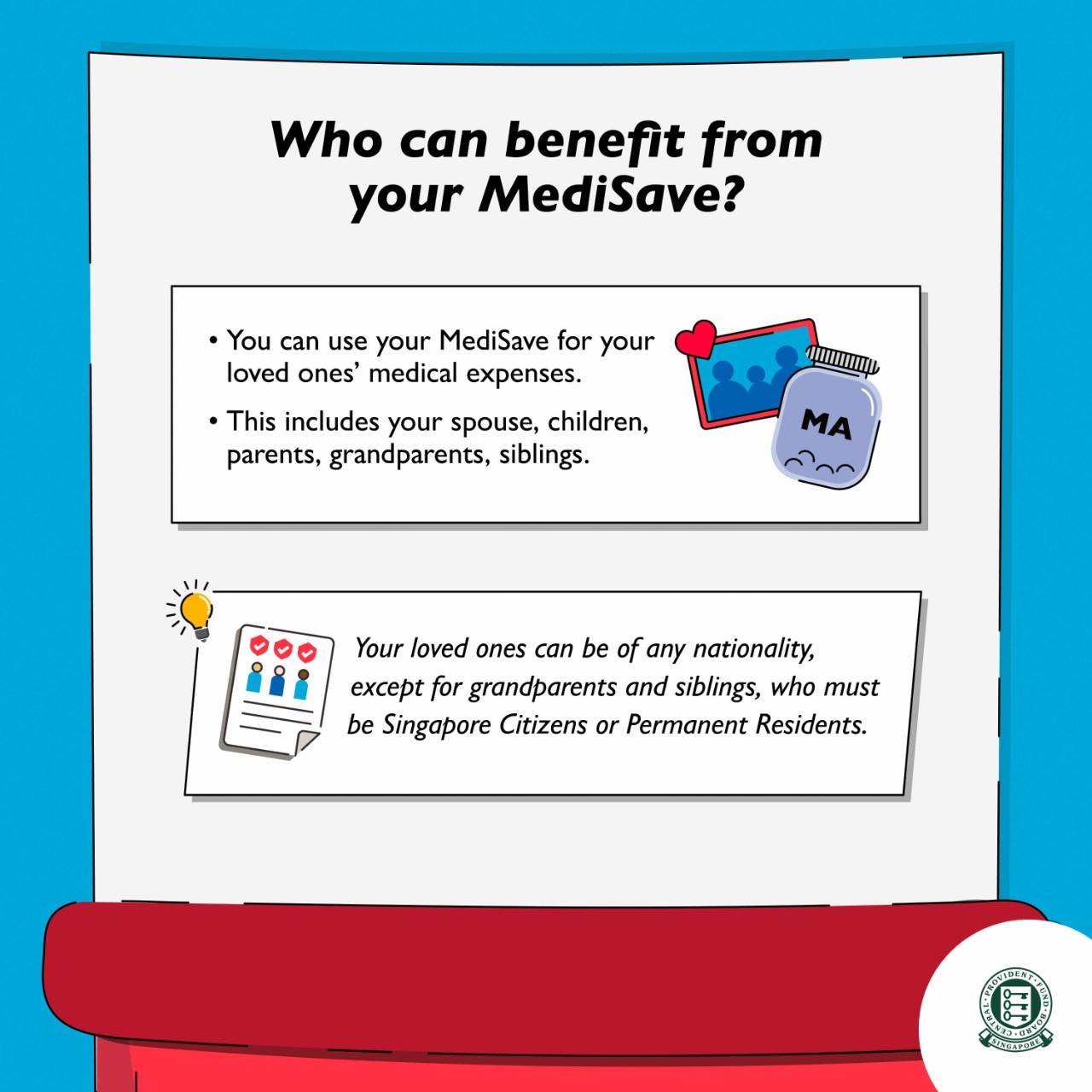
Your MediSave can be used for a variety of medical expenses, including but not limited to:
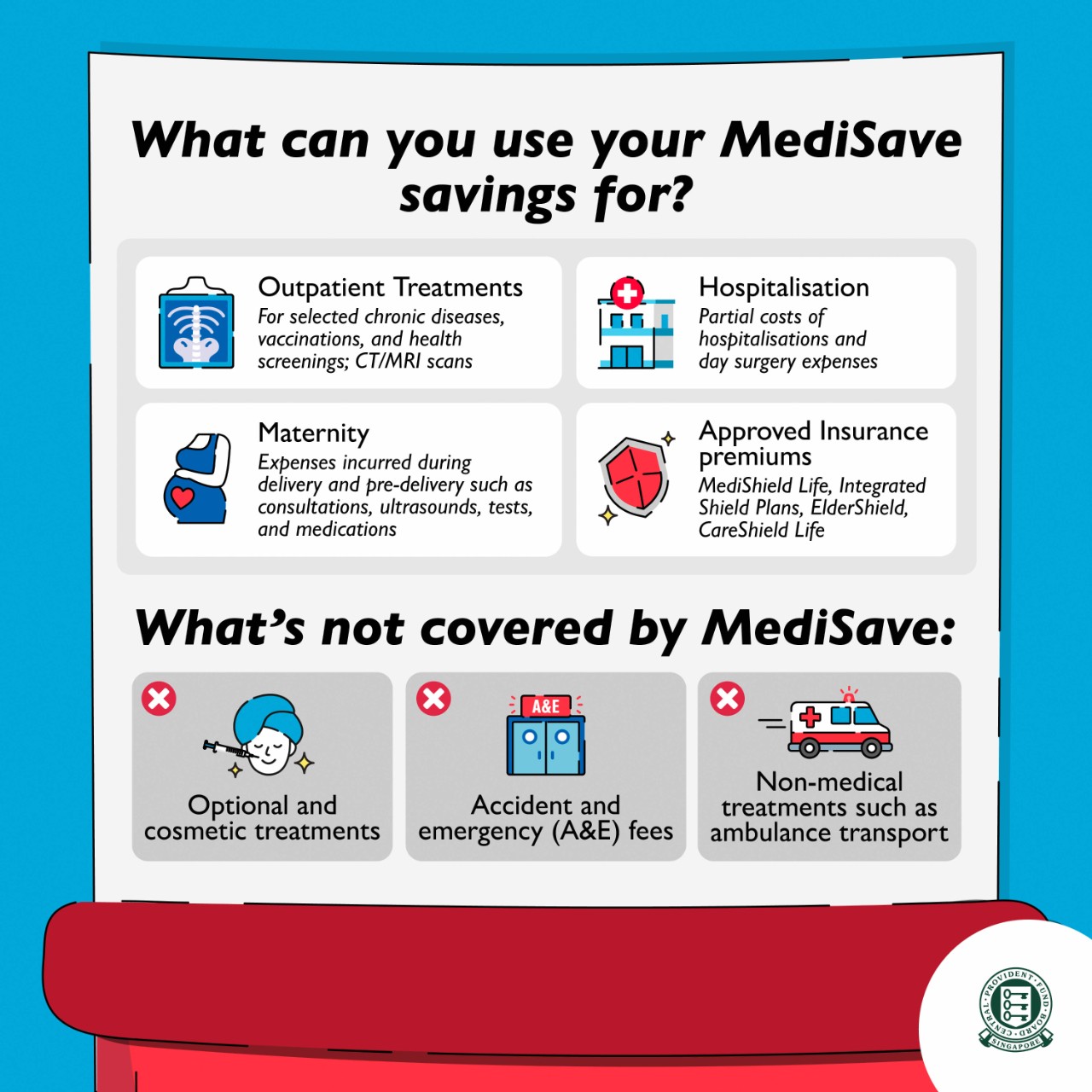
Other uses of your MediSave include long-term care, which covers:
- Rehabilitation
- Palliative care
- Disability care
Your MediSave can also be used to pay for insurance premiums, which brings us to the question: what if you need coverage for unexpected hospital bills?
MediShield Life and CareShield Life
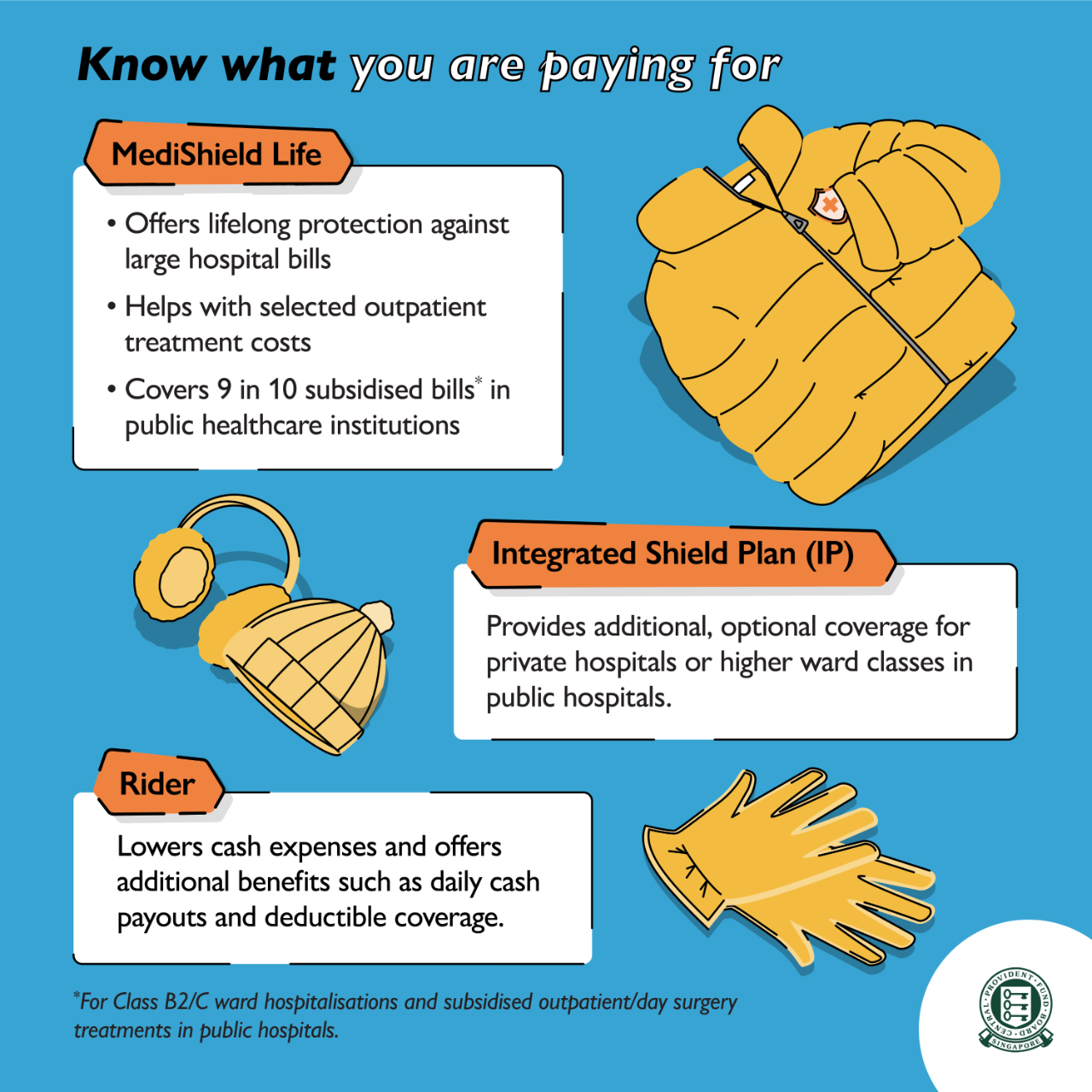
MediShield Life is a healthcare insurance that helps you pay for large hospital bills and selected outpatient treatments. These include hospitalisation and day surgeries, but also certain treatments like kidney dialysis, cancer drugs and radiotherapy and long-term palliative care.
MediShield Life payouts are used to offset part of your bill, upon which the remainder can be paid by MediSave (up to a certain limit) and/or cash. Keep in mind that this typically covers Class B2 or C wards in public hospitals.
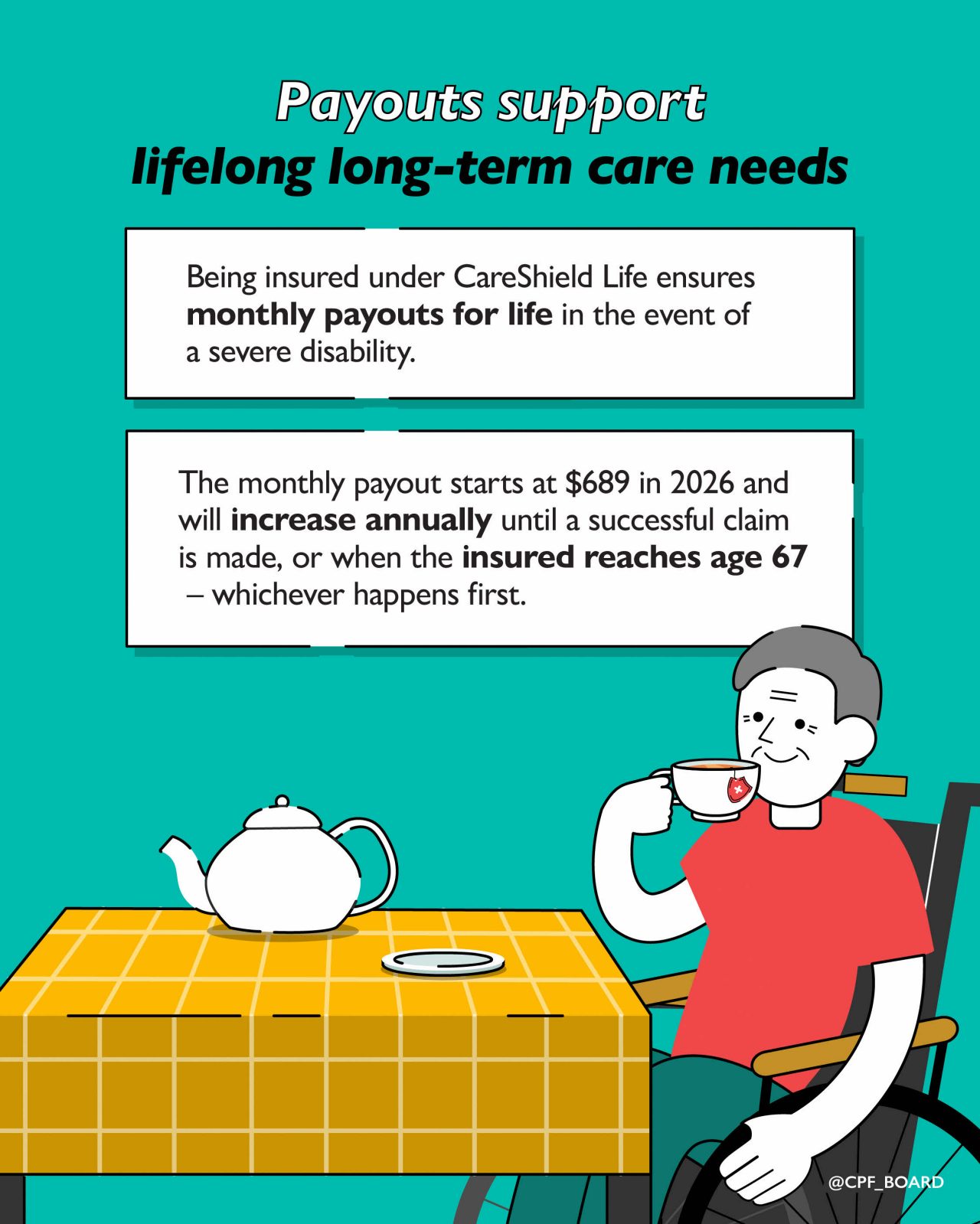
CareShield Life, on the other hand, is a long-term care insurance scheme meant to cover financial support in the form of monthly cash payouts, in the event that you develop a severe disability. It also offers you lifetime coverage, once you’ve completed paying your premiums at 67 years of age or ten years after you join, whichever is later.
Eligibility and premiums
Both MediShield Life and CareShield Life automatically cover Singapore Citizens and Permanent Residents, with one exception: CareShield Life only covers you once you turn age 30, or from 1 October 2020, whichever is later, regardless of any pre-existing medical conditions and/or disability (if you’re born in 1990 or later, CPF Board will write to you about two months before your 30th birthday with more information).
The premiums for both MediShield Life and CareShield Life can be paid for with MediSave, which is another load off your shoulders. But if you feel like they aren’t sufficient, it’s also possible to get further coverage via an Integrated Shield Plan.
Additional insurance coverage: yay or nay?
An Integrated Shield Plan (IP) is an optional plan that combines your existing MediShield Life coverage with private insurance (provided by a private insurer) for additional healthcare coverage. This includes:
- Access to private hospitals and higher ward classes (A or B1) in public hospitals
- Ability to choose your preferred doctors and direct access to specialists without referrals
What this means is that you’re still covered under MediShield Life, but now you have additional coverage offered by your private insurer.
The first thing to know is that once you start work, you’re already actively contributing to your CPF savings. Every month, a certain portion of your salary goes into your CPF savings. Both you and your employer will make contributions to your CPF accounts. As of 1 January 2026, the contribution rate for members aged 55 and below is 37% of your wage, consisting of:
- 17% by your employer
- 20% by you
But your CPF savings don’t have to work alone. If you want to help your CPF savings grow faster and have the means to do so, there are a few ways to go about it.
Topping up your CPF savings
One way is to make cash top-ups to your CPF accounts. Top-ups work best when you start early, because you’re giving your CPF savings more time to grow. By making even small top-ups consistently, you can actively increase the rate at which your savings grow.
Another key benefit is that your top-ups also offer tax relief every year. Each calendar year, you can receive up to $16,000 in tax relief, broken down as follows:
- $8,000 when you make top-ups to your own SA or RA (only up to the current year’s Full Retirement Sum); and
- Another $8,000 when you top up your loved ones’ SA or RA (only up to the current year’s Full Retirement Sum).
Do note that the $8,000 cap for cash top-ups to yourself is also shared with top-ups to the MA, and that no matter how many recipients there are, only the person topping up will receive this tax relief.
That said, cash top-ups are entirely optional, so you don’t have to feel pressured into doing so. It’s important to only top up however much you can comfortably afford, after factoring all your spendings and savings for the month.
Investing with CPF
Before you start, you should always have emergency funds set aside first. The recommended amount is to have at least three to six months’ worth of basic expenses, so you don’t compromise your needs in case of unexpected situations. These funds shouldn’t be touched unless absolutely necessary!
With that in mind, you can also invest with your CPF savings to grow your retirement income, depending on your risk appetite and long-term goals.
For example, under the CPF Investment Scheme, you can invest your OA and SA savings in a range of approved financial products to potentially grow your retirement savings further. CPF Board has also announced a new investment scheme expected to start in 2028.
However, it’s important to understand that investing does not guarantee returns. All investments come with risk, even when you invest with your CPF savings. In fact, depending on the market conditions, you could earn less than CPF’s risk-free interest rates.
As such, before you invest, understand and evaluate how much risk you’re willing to shoulder for the potential returns. This is known as your risk appetite and it helps you determine if investing is the right option for you.
Part of managing these risks involves diversifying your investments, so you don’t put all your eggs in one basket. You can also start small and increase your investments as you gain more experience and confidence.
In addition, when investing with your CPF savings, it’s important to adopt a long-term view, so you don’t exit the market prematurely because of sudden market fluctuations.
If you are just getting started on investing with your CPF savings, be sure to check out the three questions you should ask yourself before investing, so that you start your journey right!

It also helps to stay updated on the latest changes to CPF, so your decisions are based on current information.
To get more tailored financial and CPF tips and content, you can also subscribe to the Board’s social media channels:
If you prefer a hands-on experience, you can also check out the tools available to aid you on your financial planning journey. PLAN with CPF is a one-stop financial guidance platform that helps you make informed financial decisions as you navigate through life, by providing you with planners you might need along the way.
Information in this article is accurate as at the date of publication.