21 Aug 2026
SOURCE: CPF Board

Buying your first home is about getting started on your home ownership journey. However, when it comes to buying your next home, the decision comes with a different set of considerations:
1. The meaning of sales proceeds: how much will you really receive after selling your current home?
Sales proceeds refer to the amount left from the selling price, after paying off your outstanding housing loan and making the required CPF refund. This means that the selling price of your current property is not the same as the amount you will have available for your next home purchase.
If you used your CPF savings to buy your current home or service its housing loan, you will need to refund the principal amount withdrawn and the accrued interest when the property is sold. CPF housing grants used for the property and their accrued interest will also be included in the refund amount.
Accrued interest is the interest your CPF savings would have earned if they had remained in your CPF account. Refunding it along with the principal amount means that you’re restoring your CPF savings to where it would have been, so that it can continue working for you, whether it’s to support your next home purchase or your future retirement needs.
If you are below age 55, your housing refund will mainly be credited back to your OA. From age 55, the refund will first be used to top up your Retirement Account (RA) to the Full Retirement Sum, with any balance remaining then credited into your OA.
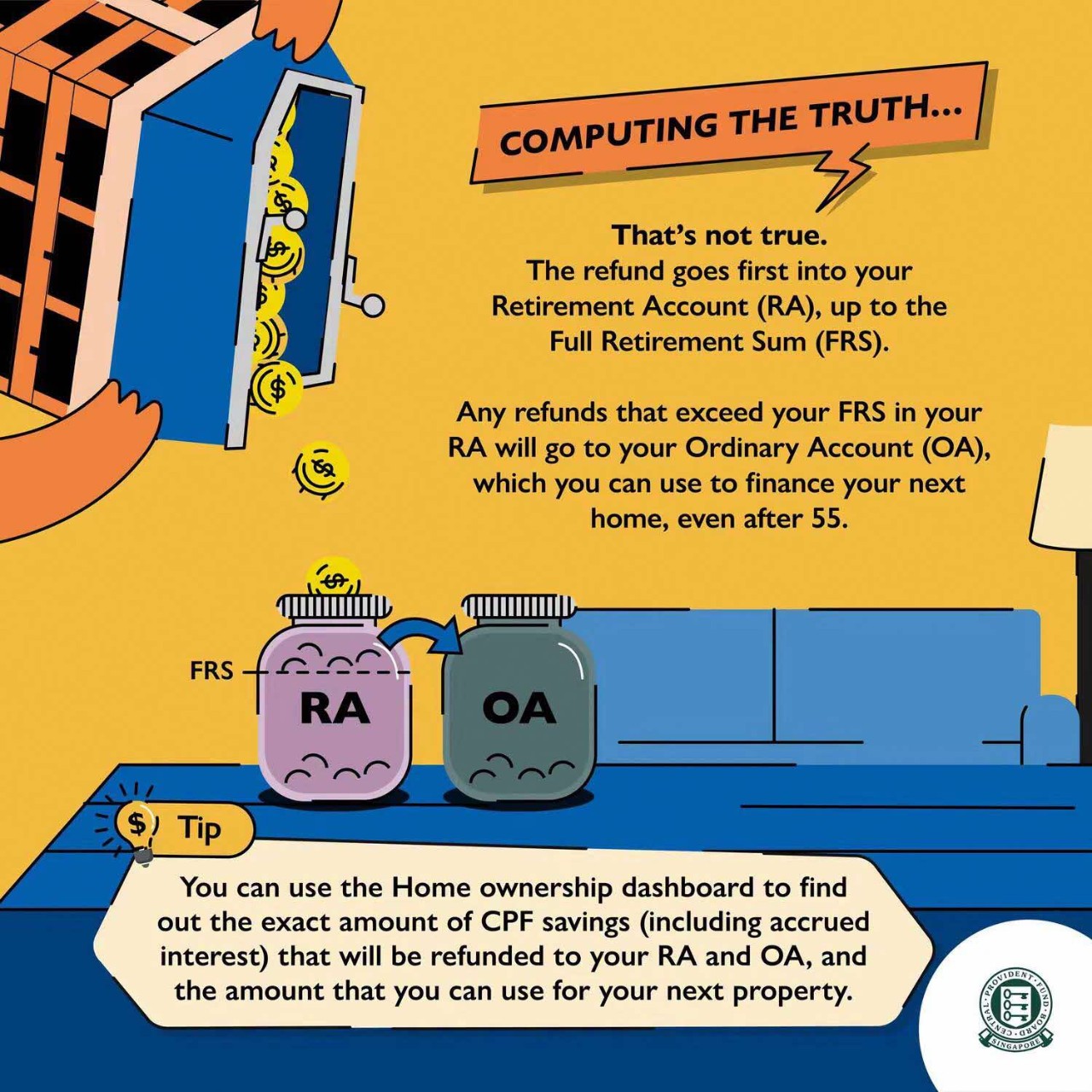
If the selling price after paying your outstanding housing loan is not enough to cover the required CPF refund, you do not need to top up the shortfall in cash if you have sold the property at market value.
What if you buy your next home before selling your current home?
This will be considered as buying your second or subsequent property. In this case, you may only use the OA savings remaining after setting aside the applicable Basic or Full Retirement Sum, depending on whether at least one of your properties can cover you until age 95. The CPF savings tied to your current home will also not be available until the sale is completed and the housing refund is credited to your CPF accounts.
You may also have to manage additional housing expenses and Additional Buyer’s Stamp Duty (ABSD) of 20% for a Singapore Citizen buying a second residential property.
2. How much of your CPF OA savings can you use for your next home?
The amount of CPF savings you can use will be affected by the property’s remaining lease. If the lease does not cover the youngest buyer until age 95, CPF usage may be pro-rated. The property generally needs a remaining lease of at least 20 years before CPF savings can be used.
You should also consider these factors to help you make an informed decision for both now and your future:
- Your new property’s price
- Your outstanding housing loan and expected sale proceeds
- Your monthly CPF contributions and an estimated number of working years you have remaining
- Your retirement savings and expected monthly payouts in retirement
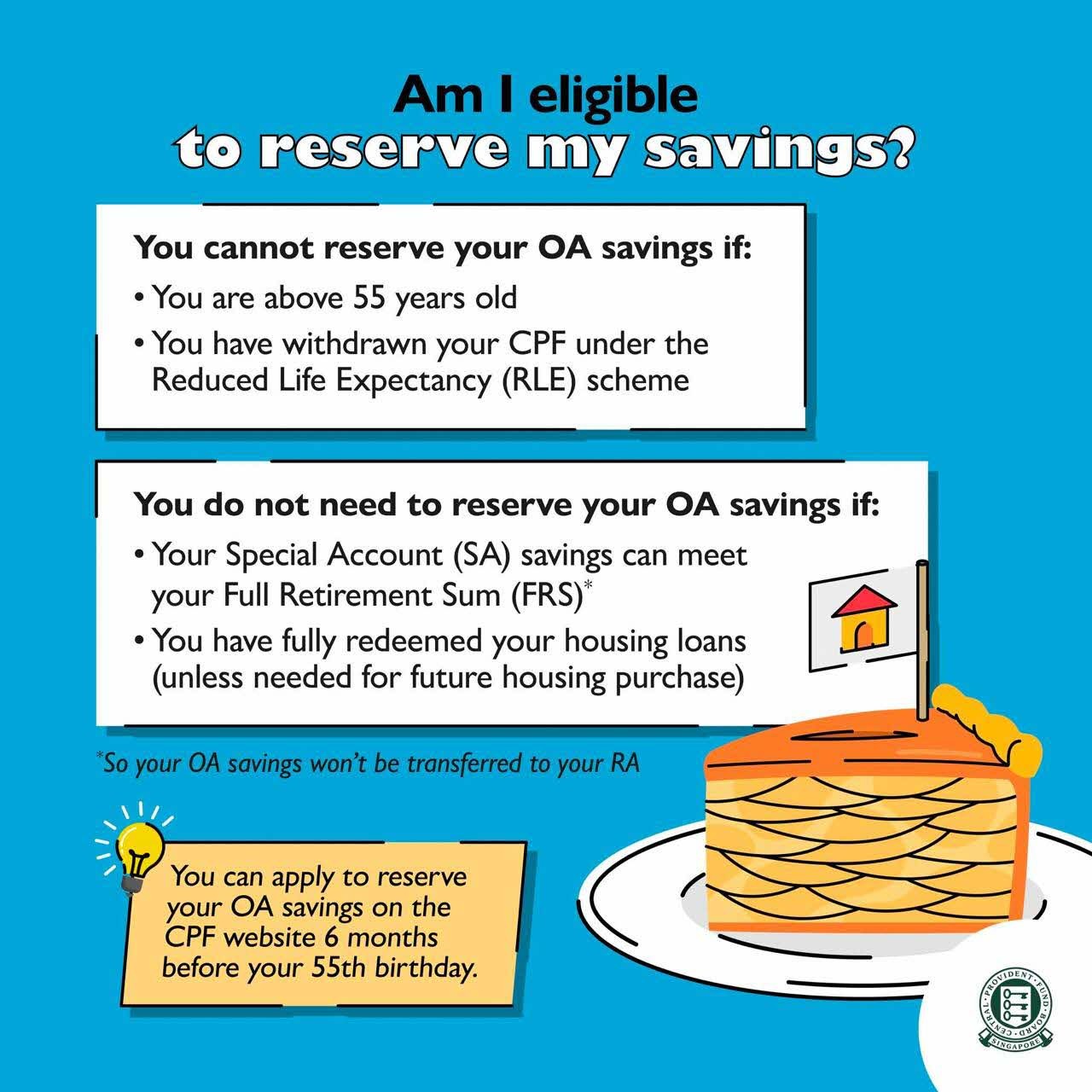
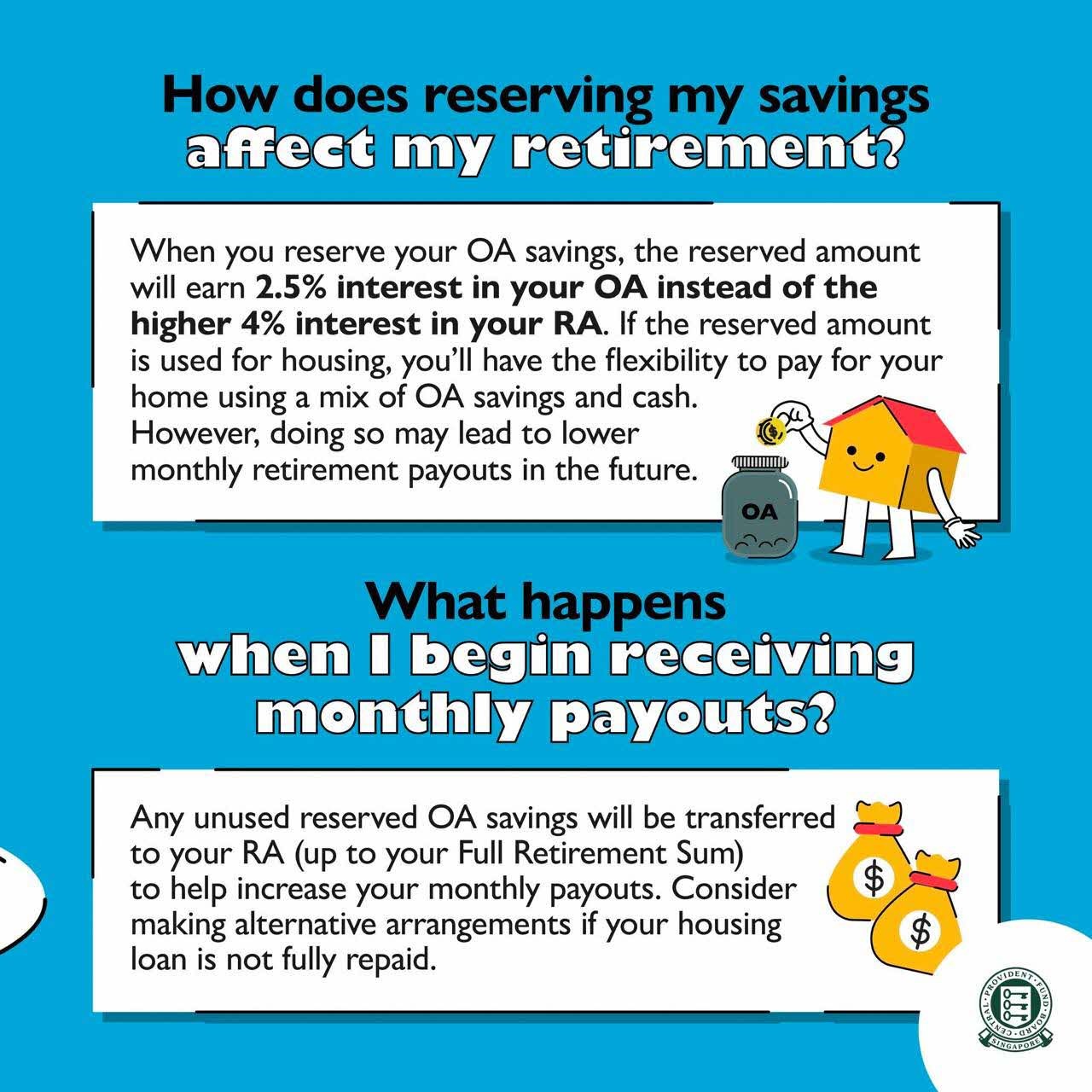
Do you need to reserve savings in your CPF Ordinary Account?
When you turn 55 years old, savings from your Special Account (SA) and OA will be transferred to your Retirement Account.
If you continue working after age 55, you can use your new CPF contributions to your OA for housing. But if you would like to reserve savings in your OA to pay for your housing needs, you will need to submit your application six months before turning 55 years old.
3. Can you continue to grow your CPF savings for retirement after financing your home?
Yes, here are some options:
Keep part of your housing refund in CPF
Any housing refund that you do not immediately use for the next property can remain in your CPF accounts and continue earning CPF interest.
This does not mean that you should just preserve CPF savings by using up your cash reserves. You will still need sufficient cash for other housing expenses, as well as other financial obligations you might have. This is why the key lies in finding a balance between keeping enough cash for present needs and keeping enough CPF savings for your future.
Support your monthly mortgage through your CPF contributions
If possible, keep your monthly instalments within your monthly CPF contribution amount to your OA. This can help you avoid drawing down your accumulated OA savings and preserves your existing balance as an emergency fund.
This becomes increasingly important as you grow older. CPF contribution rates and the proportion allocated to the OA will change with age, as your CPF is meant to support your retirement needs.
Make a voluntary housing refund if you have excess cash savings
You can use cash to make a voluntary housing refund (VHR) if your finances allow. Making a VHR reduces the amount you need to refund to CPF if you decide to sell your property. You will also have the flexibility of using the CPF savings for other CPF-approved schemes.
Do note that if you are below age 55, the refunded amount cannot be withdrawn in cash unless you meet the CPF withdrawal conditions.
Before making a VHR, ensure you have enough cash for day-to-day expenses and emergencies.
4. Will your next home still support your retirement plans?
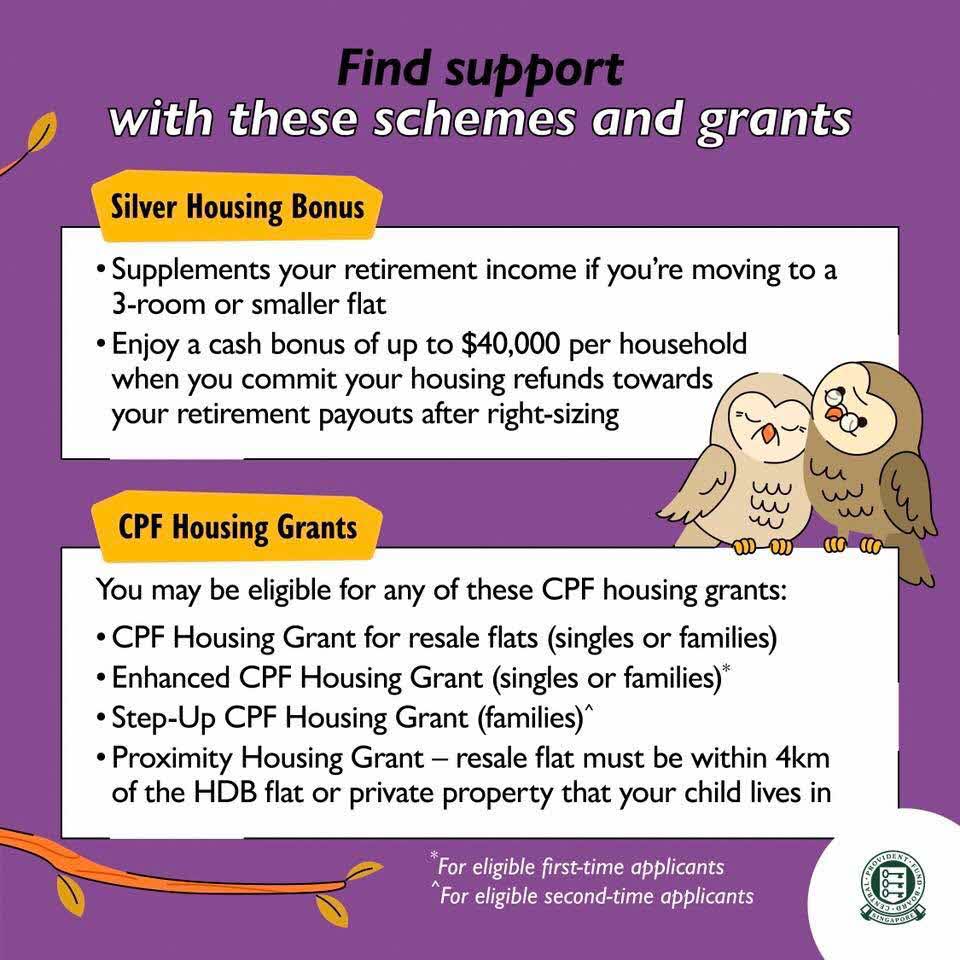
Your next property may be larger, better located or more suitable for your household. But it should not leave you with insufficient savings for retirement. This is especially important if you are approaching or already above age 55, as you may have fewer working years to rebuild CPF savings used for housing, and a longer loan tenure could extend into retirement.
A well-planned housing move should meet your needs while preserving sufficient cash, CPF savings and financial flexibility. There’s where the CPF Home Purchase Planner comes in. It can help you estimate an affordable home budget and understand its impact on your retirement savings.
Information in this article is accurate as at the date of publication.